
Our magnet glossary explains the most important terms relating to magnets and magnetism, from A to Z.
Magnet Glossary

A
- Air GapAn air gap is a nonmagnetic material between a magnet and an attracted object, or between two magnets attract…
- AnisotropicA magnet is called anisotropic when all of its magnetic domains are aligned in the same direction during manu…
- AxialThe term axially magnetized describes a magnet that is magnetized between two flat, parallel faces.
B
- B-H CurveThe B-H curve is a graph showing the relationship between magnetic flux density (B) and magnetic field streng…
- Bar MagnetA bar magnet is a permanent magnet with a magnetic length greater than its diameter, with a north and south p…
- Blocking a Magnetic FieldOnly materials that are attracted to a magnet can "block" a magnetic field, partially or completely depending…
C
- Changing Magnet StrengthOnce a magnet is fully magnetized, it is "saturated" and cannot be made any stronger.
- Closed CircuitA closed magnetic circuit is an arrangement of magnetic and ferrous material that connects the north pole of …
- Coercive ForceCoercive force is the intensity required to reduce the magnetization of a saturated object to zero, measuring…
- CoercivityCoercivity is a measure of how permanent a magnet is, or how much magnetic force is needed to reverse its mag…
- Curie TemperatureThe Curie temperature is the point at which materials lose their ferromagnetism and become paramagnetic.
D
- DemagnetizationDemagnetization is the reduction or removal of magnetization in a ferromagnetic body, such as iron parts of a…
- DensityDensity is a measure of a material's mass per unit volume. Knowing a magnet's density lets you calculate its …
- DiamagneticDiamagnetism is a type of magnetism that aligns at right angles to an object's magnetic field and therefore h…
- DiamagnetismDiamagnetism is the ability of a material to create an opposing magnetic field when exposed to a strong magne…
- DiameterThe diameter applies to round magnets and is the distance measured across a flat, round surface through its e…
- DiametricCylindrical magnets are called diametrically magnetized when their direction of magnetization runs parallel t…
- Dimensional ToleranceMagnets are produced in batches, and during machining the tolerance determines the maximum and minimum permit…
- DimensionsThe finished size of a magnet, including all surface treatments such as coatings and platings.
E
- Earth's Magnetic FieldThe Earth's surface field strength is about 0.5 gauss but varies by up to 10% depending on the strength of th…
- Eddy CurrentsEddy currents are electric currents induced when a magnetic field moves relative to an electrical conductor w…
- ElectromagnetAn electromagnet works on the principle that an electric current not only moves electrons through a circuit b…
- ElectromagnetsElectromagnets are used when very strong magnets are needed. They consist of a metal core inside a coil of wi…
F
- FerromagnetismFerromagnetism is the property of a material whose magnetic moments align parallel to each other in the prese…
- Field StrengthFor a round magnet with radius R and length L, the field Bx on the centerline at distance X from the surface …
- Flux DensityFlux density describes the number of lines of magnetization per square centimeter of pole area and is measure…
G
- GaussNamed after the mathematician Carl Friedrich Gauss, the gauss is a unit used to measure magnetic fields.
- GilbertThe gilbert is a unit of magnetomotive force, named after the English scientist and physician William Gilbert.
- GradeEach type of magnet is made in different grades. The grade defines the chemical and magnetic properties of th…
H
- HistoryThe ancient Greeks and Chinese discovered that certain rare stones, called lodestones, were naturally magneti…
- Homogeneous FieldA homogeneous magnetic field is one in which the field lines are uniform and produce an equal force at every …
- Horseshoe MagnetThe best known magnet, the horseshoe magnet, is a permanent magnet usually made of alnico, with a north pole …
- Hysteresis LoopA hysteresis loop is a four quadrant graph showing magnetizing force relative to the resulting magnetization …
I
- InductionMagnetic induction, also called flux density, is the number of lines of magnetism in each square centimeter o…
- Industry StandardsYes, industry standards for magnets were set by the MMPA and the MDFA, both now part of the International Mag…
- Influencing FactorsWhat can affect the strength of a magnet? Key factors include heat, radiation, strong electric currents and o…
- Intrinsic Coercivity (Hci)Intrinsic coercivity is the force required to permanently demagnetize a magnet. It is measured in kilo-oerste…
- Irreversible LossesIrreversible losses are the percentage of magnetism a magnet loses permanently in extreme situations, such as…
- IsotropicA magnet made of magnetically isotropic material has no preferred direction and has the same properties along…
K
- KeeperA keeper is a steel bar or plate placed across the opposite poles of a magnet so that all the magnetism can f…
L
- Loss of StrengthModern magnet materials lose a very small part of their magnetism over time, for samarium cobalt less than 1%…
M
- Magnet AssemblyA magnet assembly consists of one or more magnets combined with other components, such as steel, that usually…
- Magnet FunctionMagnets attract certain materials, exert force on other magnets and affect conductors and charged particles, …
- Magnet InformationHow can you use magnet information? Magnet data lets you estimate how much magnetic flux different materials …
- Magnet LifespanWhen kept away from factors that affect it, such as power lines, other magnets or high temperatures, a magnet…
- Magnet MachiningMagnets can be machined, but hard magnetic materials are extremely difficult to work, unlike flexible or rubb…
- Magnet Machining CostsThe cost of machining magnets depends mainly on quantity, material, shape and the required tolerances.
- Magnet ManufacturingModern magnet materials are made by casting, pressing and sintering, compression bonding, injection molding, …
- Magnet PolesMagnet poles are the surfaces from which the invisible lines of magnetic flux emerge and connect when returni…
- Magnet RatingsMagnets are characterized by three main properties: residual induction, coercive force and maximum energy pro…
- Magnet StrengthGaussmeters, magnetometers and pull testers are the most common tools for measuring a magnet's strength.
- Magnet TypesThere are three types of magnets: permanent magnets, temporary magnets and electromagnets.
- Magnetic AxisIn an anisotropic magnet, all magnetic domains are aligned the same way. The line of direction they follow is…
- Magnetic CircuitAll magnetism flows from north to south, and a magnetic circuit is the path it takes to get from north to sou…
- Magnetic DomainMagnetic materials such as permanent magnets are divided into microscopic regions called domains, each with a…
- Magnetic FieldsThe space around a magnet in which a magnetic force acts is called a magnetic field.
- Magnetic PoleThe ends of a magnet are called poles: one is the north pole and the other the south pole.
- Magnetic RegionsMagnetic materials such as permanent magnets are divided into individual microscopic regions whose structure …
- MagnetismMagnetism describes the forces of repulsion and attraction between different substances, such as iron and oth…
- Magnetization DirectionMagnets can be magnetized across any axis. The direction of magnetism determines which side of the magnet is …
- MagnetsMagnets can be made by placing a magnetic material, such as iron or steel, in a strong magnetic field.
- Maximum Energy Product (BHmax)The maximum energy product of a magnet is measured in mega gauss oersteds (MGOe) and is the primary indicator…
- Maximum TemperatureMagnets work with different efficiencies depending on the circuits in which they operate.
- Measuring the Surface FieldIf a neo magnet has a Br of 12,300 gauss, you will not measure 12,300 gauss on its surface, because Br is mea…
- MGOeMega gauss oersteds is the CGS measure of a magnet's maximum energy product (BHmax).
- MountingWhen a magnet needs to be attached to a device, you can use either mechanical means or adhesives to hold it i…
N
- North and South PoleThe north pole is defined as the pole of a magnet that, when free to rotate, seeks the Earth's north pole.
- North PoleYou cannot tell the north pole just by looking. Place a compass near the magnet to find out.
O
- Operating TemperaturesWhat are the maximum recommended operating temperatures for different magnet materials? An overview for NdFeB…
- OrderingTo order magnets efficiently, you need a clear idea of what you want to achieve. Here are the key points to c…
- Orientation DirectionMost modern magnet materials have a "grain" and can only be magnetized in one direction for maximum effect: t…
P
- ParamagnetismParamagnetism was first studied and discovered by British scientist Michael Faraday and occurs in materials w…
- Permanent MagnetA permanent magnet is a material that can produce a magnetic field and stays magnetized after the external fi…
- Permanent MagnetsModern permanent magnets are made from special alloys such as alnico, ferrite, neodymium iron boron and samar…
- PermeabilityThe ability of a material to become magnetized is called its magnetic permeability.
- PlatingPlating is another term for coating. Raw neodymium magnets are plated or coated to prevent corrosion and dema…
- PolesYes, the north or south pole of a magnet can be marked if required.
- Pull ForcePull force is one way of measuring a magnet's strength: the force needed to separate the magnet from a low ca…
- Pull Force FactorsA magnet's pull force is determined by its gauss rating and its geometry.
- Pull Force TestNot necessarily. The pull force test is a laboratory test carried out under ideal conditions.
R
- Rare Earth MagnetsRare earth magnets are made from the rare earth group of elements. The most common are neodymium iron boron a…
- RemagnetizedUnless the material has been damaged by extreme heat, most magnets can be remagnetized back to their original…
- RemanenceRemanence, or residual magnetism, is the magnetization that remains in a ferromagnetic material after an exte…
S
- StoragePractical tips for handling and storing magnets safely, from avoiding injuries to protecting alnico magnets w…
- Strongest MagnetsThe strongest magnets available today are rare earth magnets, and among them neodymium magnets are the strong…
- SuperconductorSuperconductors are the strongest magnets. They need no metal core and consist of wire coils made of special …
T
- Temporary MagnetSoft iron and certain iron alloys such as permalloy are magnetized very easily even in a weak field, but lose…
- TeslaThe tesla is an SI unit for measuring the strength of a magnetic field and is abbreviated with the symbol T i…
- TmaxThe maximum operating temperature is the highest temperature at which a given magnet type can operate before …
From the guides
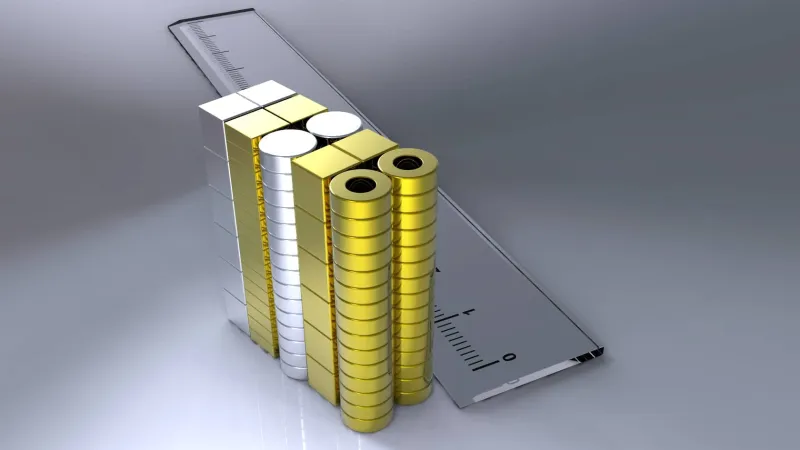
Types of Magnets
From bar magnets to neodymium super magnets: an overview of the most important types of magnets and their uses.
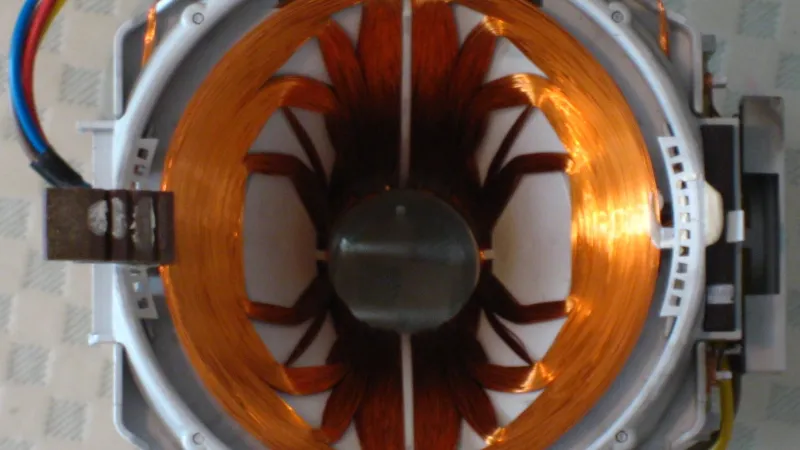
Uses of Magnets
Magnets are used far beyond speakers and fridges: learn about their role in data storage, deflection magnets and relays.

Magnetism: What Is It?
What is magnetism, how does it arise physically and what can you do with it? We take a closer look at this fascinating phenomenon.