
6 min read
History of Magnetism: From Lodestone to Neodymium
From mysterious lodestones and the Chinese compass to Faraday, Maxwell and neodymium: a journey through 2,500 years of magnetism.
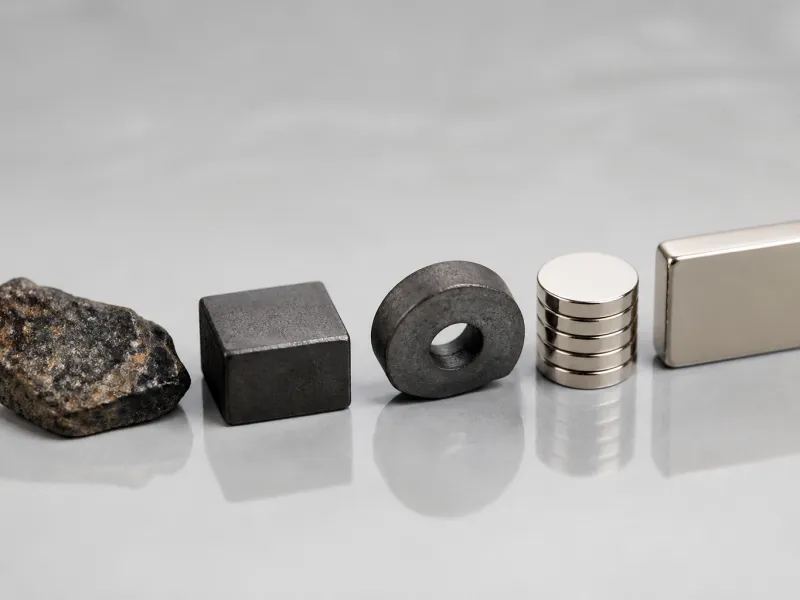
Magnets have been with us for more than two and a half thousand years. First they were mysterious stones that pulled on iron. Then they became guides for sailors, and eventually the key to the electric motor, the generator and radio.
In this overview you will travel from the lodestones of antiquity through the Chinese compass and William Gilbert's book "De Magnete" to Oersted, Faraday and Maxwell, who tied electricity and magnetism together. At the end we look at the modern high performance magnets found in so many everyday devices today.
01
Lodestone and Magnesia: where it all began
It all started with a mineral: magnetite. Some chunks of it are naturally magnetized. These are called lodestones, an old English word that roughly means "leading stone." Magnetite is one of very few minerals that you can find already magnetized in nature.
How these stones get their magnetism was a puzzle for a long time. The most widely accepted explanation today is the strong magnetic field around lightning strikes, since Earth's own field is too weak to do the job. That fits with the fact that lodestones are mostly found near the surface rather than deep underground.
The word magnet probably goes back to Magnesia, an ancient region usually placed in Anatolia, in present day Turkey, where such stones were found. A charming legend tells of a shepherd named Magnes whose iron studded gear stuck to the rock. Whether he ever existed, nobody knows. What is documented is that the Greek philosopher Thales of Miletus, in the 6th century BC, was among the first to describe lodestone attracting iron. In China the same observation was written down early as well, for example in the chronicle known as the Lüshi Chunqiu.
02
The Chinese compass: from fortune telling spoon to navigation
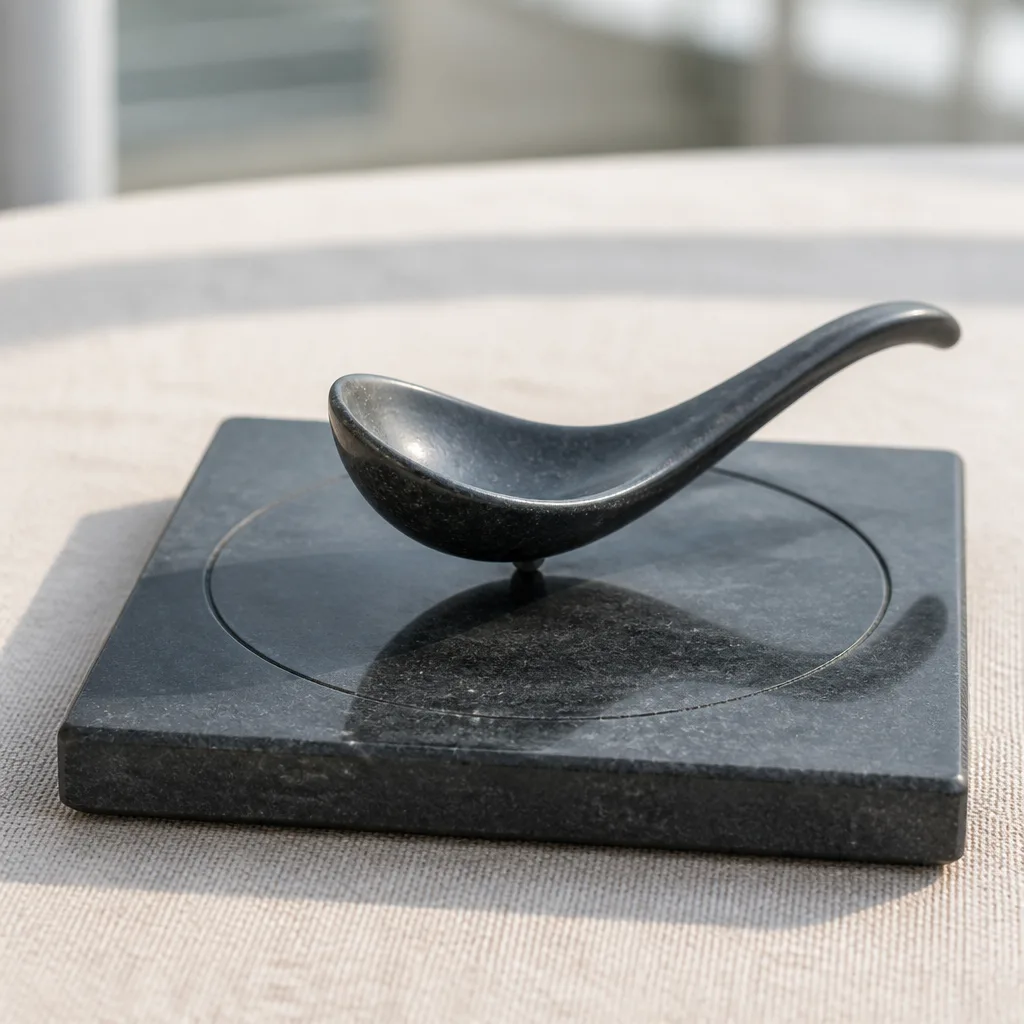
We owe the compass to China, though not to sailors at first. As early as the Han dynasty, from about 206 BC, geomancers experimented with lodestone to tell fortunes and align places. Texts describe the "south pointing spoon," also called sinan: a spoon of lodestone resting on a smooth plate, with its handle turning toward the south.
Here is a twist: archaeologists have not yet found an original magnetite spoon in a Han era tomb. What we know comes from written sources and reconstructions.
For navigation, the compass is documented by 1088 at the latest. During the Song dynasty the scholar Shen Kuo described iron needles that were magnetized by rubbing them with a lodestone. In Western Europe the compass first appears in records around 1190, and in the Islamic world in the 13th century. Dry compasses with a pivoting needle came along around 1300. Already in 1269 the scholar Peter Peregrinus was one of the first to describe systematic experiments with lodestones and their poles.
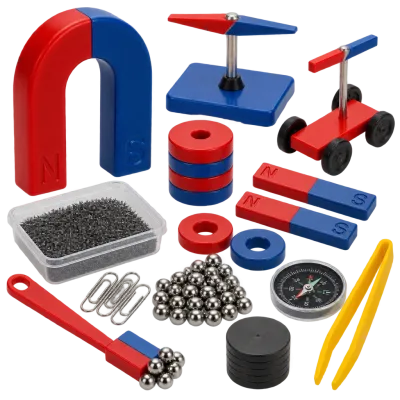 Matching productMagnet science kit for kidsAmazon →
03
William Gilbert: Earth is a magnet
The year 1600 brought a giant leap. The English physician William Gilbert published "De Magnete," a Latin work in six books. Its full title gives away the central idea: it is about the magnet, magnetic bodies and that great magnet, the Earth.
Gilbert did not rely on ancient authorities but on his own experiments. Using a sphere of lodestone he called a "terrella," a little Earth, he showed how a compass needle lines up at different spots on a magnetic ball. He concluded that Earth itself behaves like a giant magnet. That explained the declination and dip of the compass needle that sailors had noticed for a long time.
- He drew a clear line between magnetism and the attraction produced by rubbed amber.
- From the Greek word for amber he coined the term "electricus," the root of our word electricity.
- He described how to magnetize compass needles on purpose by heating and cooling them.
- His strictly experimental approach made the book a cornerstone of early modern science.
Around 130 years later, in about 1730, Servington Savery bundled hardened steel bars into a compound magnet. Artificial magnets were becoming a material that could be made deliberately.
04
Oersted and Ampère: current creates magnetism
Until the 19th century, electricity and magnetism were seen as separate worlds. That changed in 1820. On April 21, 1820, the Danish physicist Hans Christian Oersted saw a compass needle swing when current flowed through a wire next to it. Contrary to a popular story, this was not pure luck: Oersted had been looking for a connection on purpose for years. He published his results that July.
The news spread fast. Within the same year André-Marie Ampère, as well as Jean-Baptiste Biot and Félix Savart, studied the forces between currents and magnets and put them into formulas. In 1825 William Sturgeon built the first horseshoe electromagnet: copper wire around an iron core that could lift heavy iron objects when current flowed. The CGS unit of magnetic field strength, the oersted, still honors the Danish scientist.
05
Faraday and Maxwell: the birth of field theory
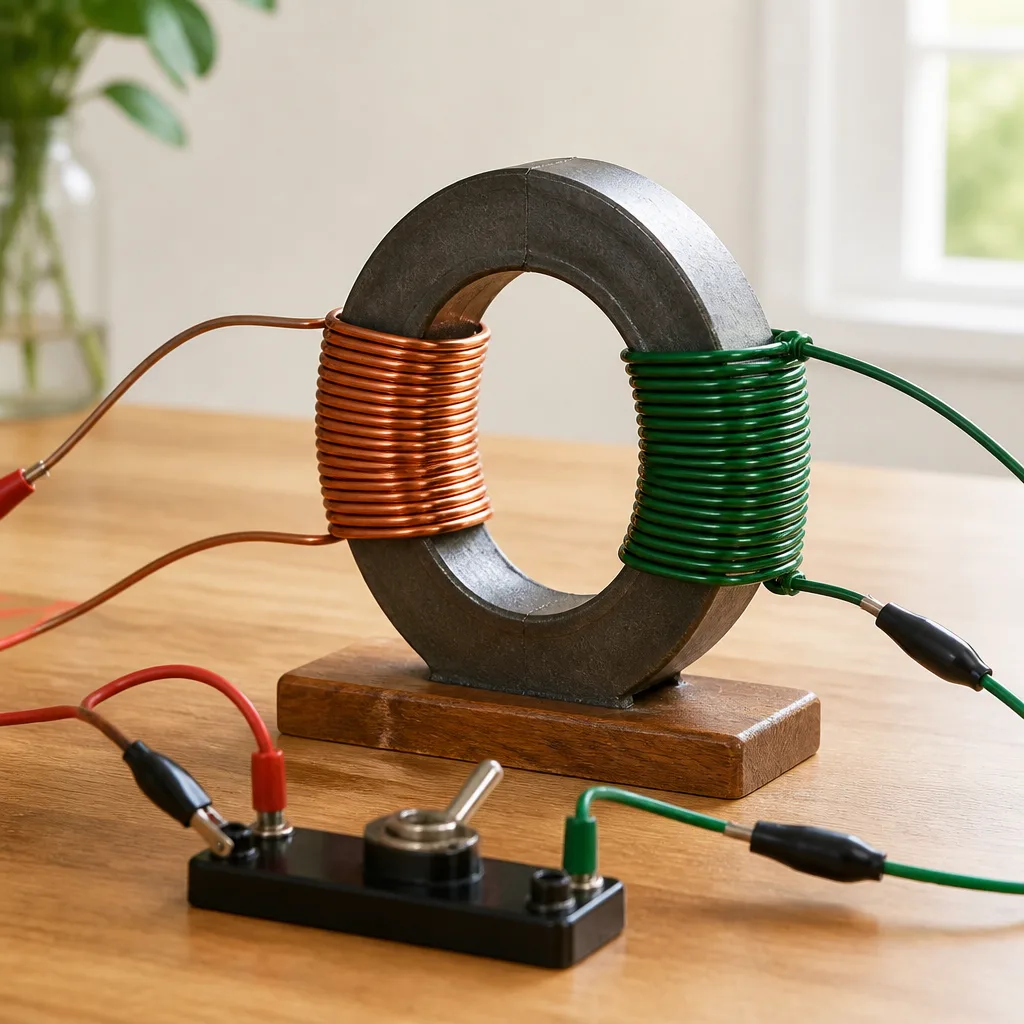
Michael Faraday, a brilliant experimenter with almost no formal schooling, in a sense turned Oersted's discovery around. In 1821 he made a current carrying wire circle around a magnet, an early electric motor. In 1831 he wound two insulated coils around an iron ring. When he switched on the current in one coil, a brief current also flowed in the other. This electromagnetic induction is still the principle behind every generator and every transformer.
In 1845 Faraday showed that a magnetic field can affect light, now known as the Faraday effect, and he described diamagnetism. Above all, he thought in terms of lines of force and fields long before there was math to match.
That math came from the Scottish physicist James Clerk Maxwell. In papers from 1861 to 1865 he unified the laws of electricity and magnetism and calculated that electromagnetic waves travel at the speed of light. His bold conclusion: light is an electromagnetic wave. His major textbook on the subject appeared in 1873. Oliver Heaviside later condensed the equations into the compact set of four that students learn today. In 1887 Heinrich Hertz demonstrated electromagnetic waves in the lab, an impressive confirmation of Maxwell's theory.
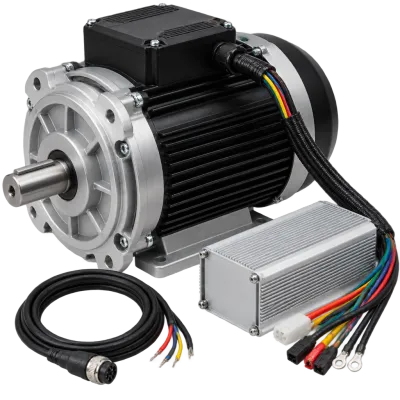 Matching productElectric motor kitAmazon →
06
Modern magnets: from alnico to neodymium
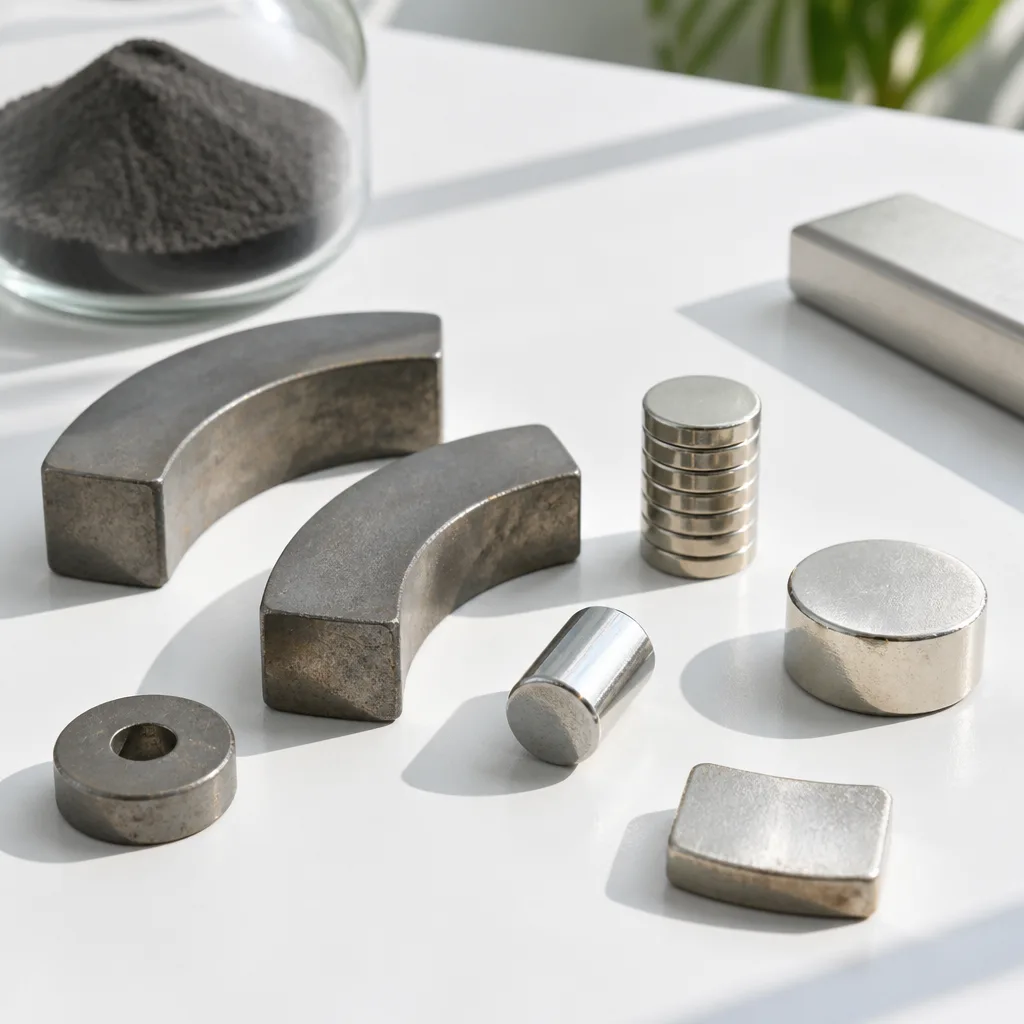
While theory advanced, materials got better too. In 1931 T. Mishima in Japan discovered an alloy of iron, nickel and aluminum with twice the coercivity of the best magnet steels of the day. It led to alnico magnets, which were considered the strongest permanent magnets until the 1970s.
In the early 1960s samarium cobalt opened the era of rare earth magnets, based on work by Karl Strnat and Alden Ray in the United States. SmCo magnets handle high temperatures well, but their raw materials are expensive. That drove the search for cheaper alternatives. In the early 1980s General Motors and Sumitomo Special Metals, where researcher Masato Sagawa played a key role, developed magnets made of neodymium, iron and boron almost simultaneously.
| Material | Since about | Key trait |
|---|---|---|
| Lodestone (magnetite) | antiquity | naturally magnetized |
| Magnet steel | 18th century | can be made and magnetized on purpose |
| Alnico | 1930s | long the strongest permanent magnet |
| Samarium cobalt | 1960s | excellent heat resistance |
| Neodymium (NdFeB) | 1980s | very high energy density at moderate material cost |
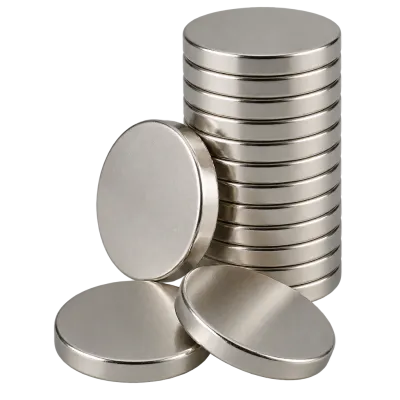
By volume, neodymium magnets store about 18 times as much magnetic energy as ordinary ferrite magnets. That is why motors, speakers and sensors can be made so much smaller and lighter today. Treat them with respect: strong magnets can pinch fingers painfully and are dangerous for children if swallowed.
 Matching productNeodymium disc magnets setAmazon →
07
Frequently asked questions
Where does the word magnet come from?
Most likely from Magnesia, an ancient region where naturally magnetic stones were found. The story of the shepherd Magnes, on the other hand, is a legend.
Who invented the compass?
The compass comes from China. Lodestone was first used for fortune telling, and the compass is documented for navigation at sea by 1088 at the latest.
Why was Oersted's discovery so important?
In 1820 it proved for the first time that electric current creates a magnetic field. That kicked off electrical engineering, with the electromagnet, the motor and the generator.
When were neodymium magnets invented?
In the early 1980s. General Motors and Sumitomo Special Metals developed them almost at the same time, independently of each other.
Sources:
- supermagnete.de: Geschichte der Magnete
- Helmholtz-Zentrum Dresden-Rossendorf: Geschichte des Magnetismus
- Wikipedia: Lodestone
- Wikipedia: Compass
- Wikipedia: De Magnete
- Wikipedia: Hans Christian Ørsted
- Wikipedia: Michael Faraday
- Wikipedia: James Clerk Maxwell
- Wikipedia: Alnico
- Wikipedia: Samarium-cobalt magnet
- Wikipedia: Neodymium magnet
Explore
Read next
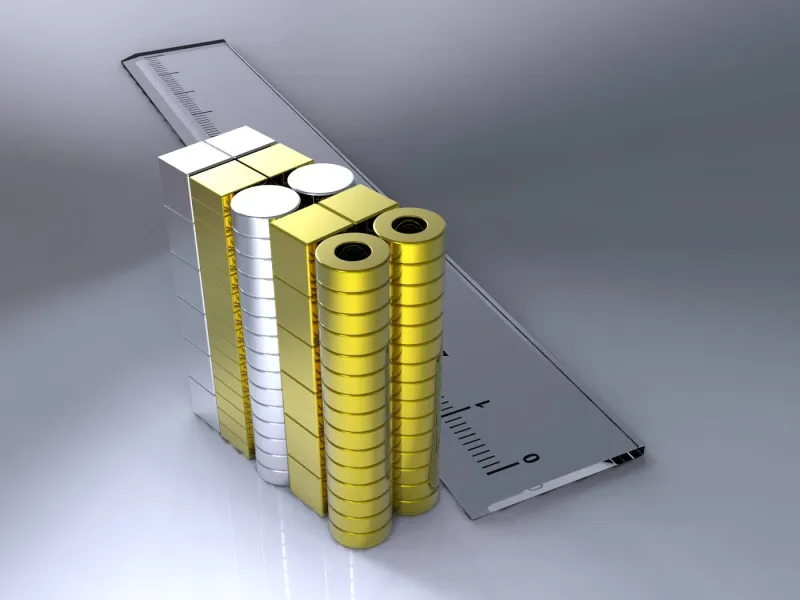 Types of MagnetsFrom bar magnets to neodymium super magnets: an overview of the most important types of magnets and their uses.
 Uses of MagnetsMagnets are used far beyond speakers and fridges: learn about their role in data storage, deflection magnets and relays.
 Magnetism: What Is It?What is magnetism, how does it arise physically and what can you do with it? We take a closer look at this fascinating phenomenon.