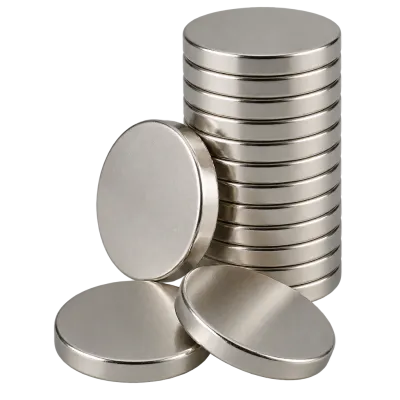
What determines the pull force of a magnet?
The pull force of a magnet is determined by its gauss values and its geometric parameters. The higher the gauss value, the greater the pull force for magnets of the same size. The gauss rating is determined by the magnet's material and grade. For example, with neodymium magnets, the higher the N number, the higher the gauss rating. So grade N52 has a higher gauss rating than N45, and so does its pull force for a magnet of the same size.
Increasing the thickness of a magnet is better than increasing its width. In general, pull force is proportional to the thickness of the magnet and the size of the contact area. So increasing the thickness is better than increasing the width, unless the thickness is equal to or greater than the width.
Choosing a round magnet is better than choosing a rectangular magnet. Because a circle has a larger area than a rectangle with the same perimeter, you get a stronger magnet than a rectangular one for the same magnet weight.
In summary, choose magnets in the following order,
- Choose a round magnet over a rectangular magnet whenever a round magnet can be used.
- Increase the thickness before enlarging the contact area, unless the thickness is equal to or greater than the width.