
6 min read
Electromagnets: Magnetic Force at the Flip of a Switch
Current on, magnet on: learn how coil and iron core work together, where electromagnets hide in everyday life, and how to build one yourself.

A permanent magnet is always on. An electromagnet has a switch: when current flows, it pulls, and when the current stops, it lets go. That single feature makes it one of the most important components in technology, from the tiny relay in your washing machine to the huge lifting magnet at the scrapyard.
In this guide you will learn what happens inside a coil, why an iron core makes such a difference, what determines strength, and where electromagnets show up in everyday life. At the end, you will build one yourself with just a few parts.
01
From wire to magnet: the principle
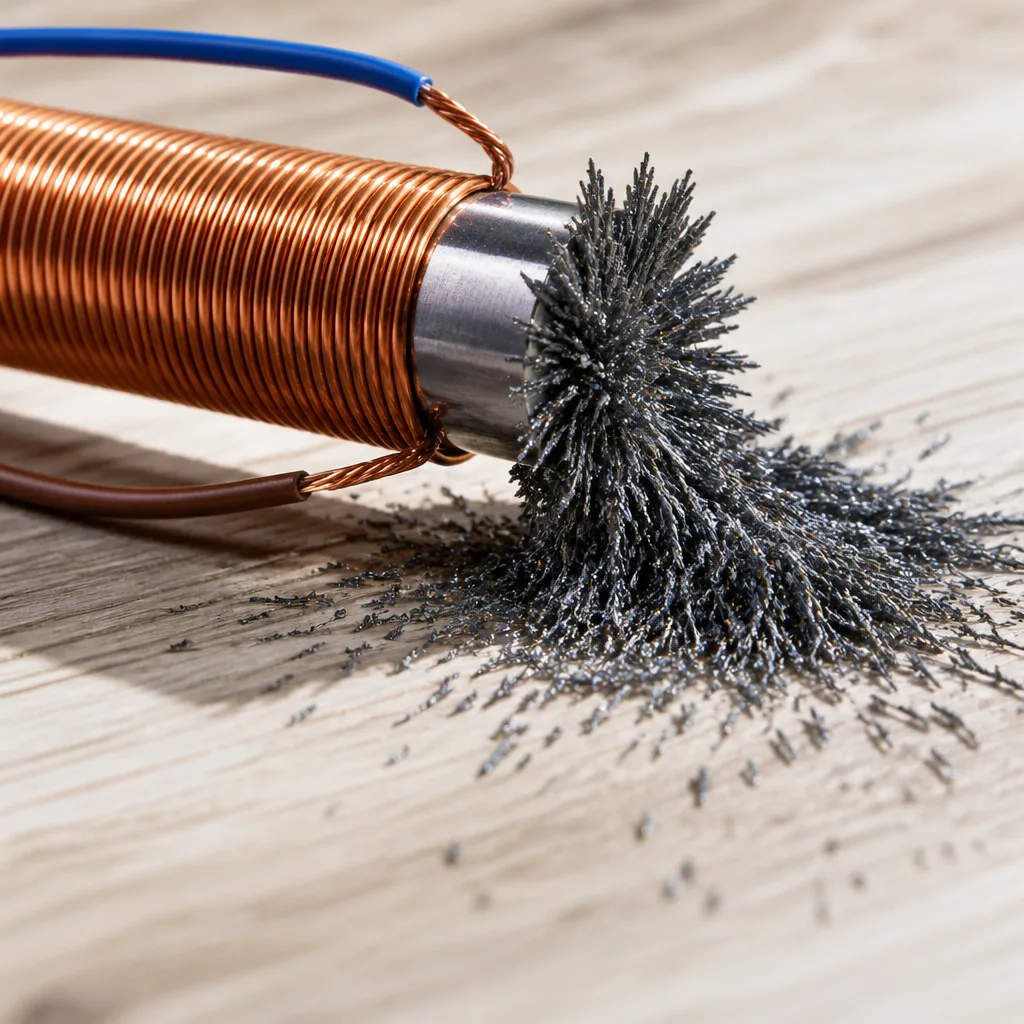
Every wire carrying an electric current is surrounded by a magnetic field. Around a straight wire this field is weak and forms rings around the conductor. Wind the wire into a coil, and the fields of the individual turns add up. Inside the coil you get a concentrated field, and from the outside the coil behaves like a bar magnet with a north and a south pole.
Which end becomes the north pole depends on the direction of the current. A handy memory aid is the right-hand rule: curl the fingers of your right hand in the direction the current flows through the turns, and your thumb points to the north pole. Flip the battery around, and the poles swap too.
The idea is almost 200 years old. In 1824 the English inventor William Sturgeon wrapped copper wire around a horseshoe-shaped iron core that could lift many times its own weight. Starting in 1830, the American physicist Joseph Henry improved the design considerably: he insulated the wire with silk, which let him stack many layers of windings. His magnets could already hold loads of several hundred kilograms.
02
Coil and core: the team behind the force
A coil on its own is a magnet, but a fairly weak one. It gets truly strong once you add a core made of ferromagnetic material, usually soft iron or special electrical steel. This material contains tiny regions called magnetic domains, which are randomly oriented at first. The coil's field lines them up, and their combined fields reinforce the field of the coil. With iron, the boost can be more than a thousandfold.
The word "soft" matters here. Soft iron loses almost all of its magnetization as soon as the current is switched off. A core of hardened steel, on the other hand, would keep part of its magnetization, and your electromagnet would still stick after being turned off.
- Coil: insulated copper wire, often enameled magnet wire, so the turns do not short each other
- Core: soft iron or electrical steel that concentrates and amplifies the field
- Power source: determines how much current flows, and therefore the strength
- Armature: the movable iron part that gets pulled in, for example in relays and bells
03
What determines the strength?
The key quantity is called magnetomotive force, often simply ampere-turns: the number of turns multiplied by the current. In theory, 100 turns carrying 1 ampere produce the same magnetomotive force as 1,000 turns carrying 0.1 ampere. Double the turns or the current, and the field roughly doubles as well.
That math does not work forever, though. Once an iron core is almost fully aligned, it is saturated. For iron this happens at roughly 1.6 to 2 tesla. Beyond that point, more current adds hardly any extra force and mostly produces extra heat. Other factors include:
- Air gap: Even a thin gap between core and armature noticeably weakens the holding force. That is why holding surfaces are made as flat as possible.
- Core shape: A horseshoe shape guides the field back through both poles and holds more firmly than a single bar pole.
- Heat: The resistance of the wire turns some of the current into heat. With direct current, that is the main loss. With alternating current, eddy currents and hysteresis losses in the core are added, which is why such cores are built from thin, insulated steel sheets.
 Matching productMagnetic car phone mountAmazon →
04
Electromagnets in everyday life and industry
You probably use dozens of electromagnets every day without noticing. Here are some typical examples:
| Application | What the electromagnet does |
|---|---|
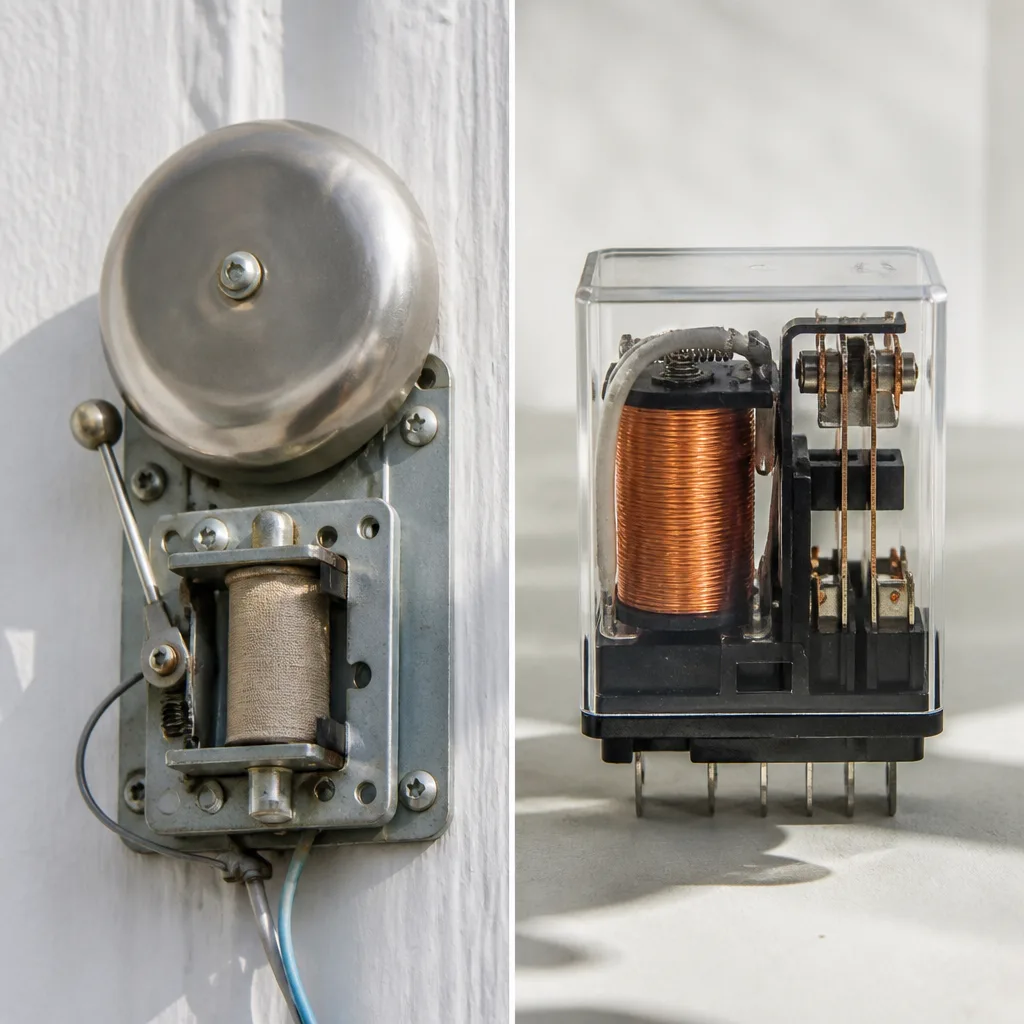
| Doorbell | Pulls an armature with a striker that hits the bell. In classic bells the movement breaks the circuit, the armature springs back, and the cycle starts over. |
| Relay | A small control current moves an armature that opens or closes a separate contact. This lets a weak circuit switch a powerful one. |
| Loudspeaker | A light voice coil sits in the field of a permanent magnet. The audio signal constantly changes its current, so it moves back and forth and drives the cone. |
| Lifting magnet | Lifts steel scrap or sheet metal on a crane. When the current is switched off, the load drops exactly where it should go. |
| Door holder and door opener | Holds fire doors open or unlocks front doors at the push of a button. |
| Motors and transformers | Use coils to create changing fields for rotation or for converting voltage. |
Electromagnets also play a starring role in medicine: an MRI scanner relies on a superconducting electromagnet whose coils are cooled to extremely low temperatures.
05
Electromagnet or permanent magnet?
Each has its strengths. A neodymium magnet needs no power and is amazingly strong for its size, but you cannot switch it off. An electromagnet can be controlled and switched, but it needs a power source and produces heat.
- Choose a permanent magnet when something should hold all the time: a memo board, a tool strip, a cabinet latch.
- Choose an electromagnet when you want to switch or adjust the holding force: a door lock, a sorting line, lifting equipment.
Many devices combine both, as the loudspeaker shows.
 Matching productNeodymium disc magnets setAmazon →
06
Build your own electromagnet
A simple experiment needs only a few materials, and you see the result right away.
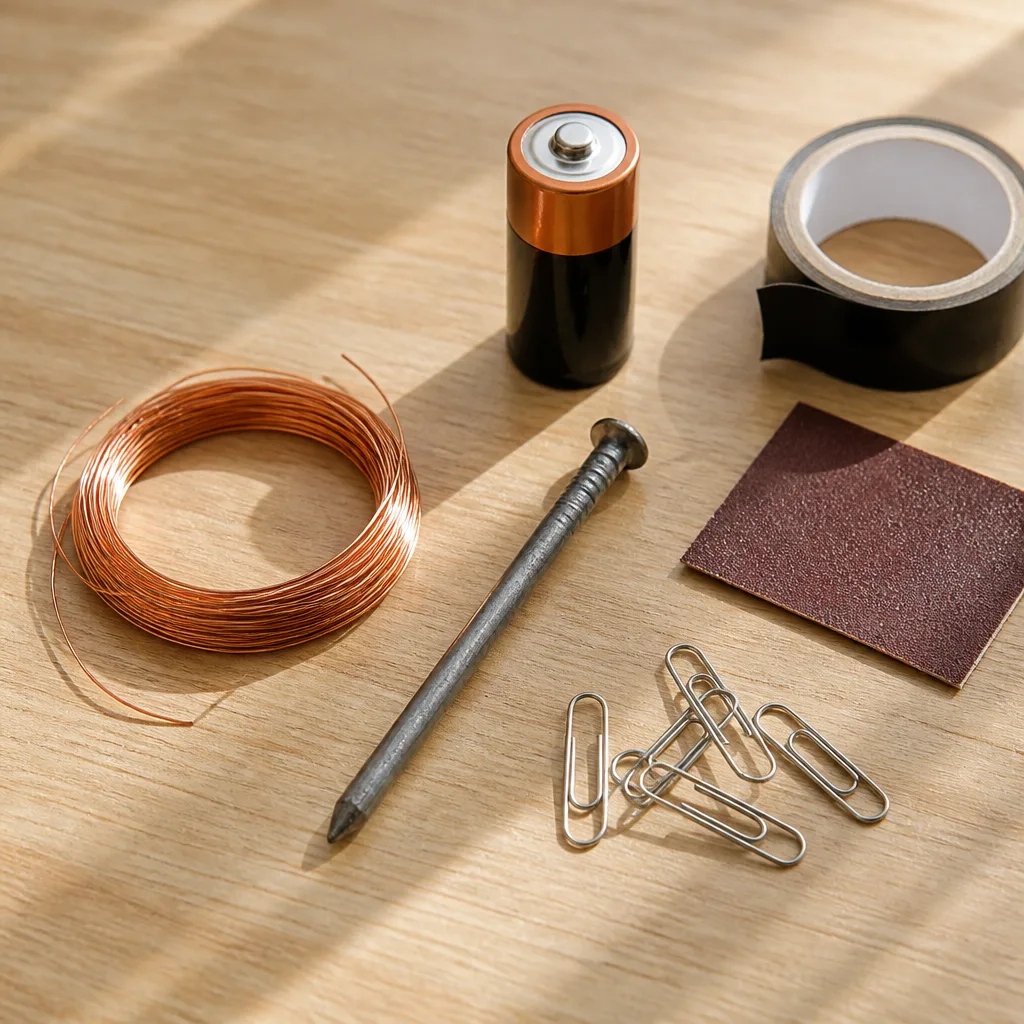
- a large iron nail or iron bolt, about 3 to 4 inches long
- 3 to 6 feet of thin insulated copper wire, ideally enameled magnet wire
- a 1.5 volt battery, for example size AA or D
- tape, paper clips and a bit of sandpaper
Here is how: Wind the wire tightly around the nail, always in the same direction. Leave a length of wire free at both ends. If you use enameled wire, sand the ends until the bare copper shows. Hold or tape the ends briefly to the two battery terminals, and the tip of the nail picks up paper clips. Break the contact, and they fall off.
Keep experimenting: more turns make the magnet stronger, while an aluminum nail or a wooden dowel barely works at all. With a compass you can check where the north and south poles are and watch them swap when you reverse the battery.
Safety notes: You are deliberately creating a short circuit here. The wire and battery get warm or even hot, and the battery drains quickly. Only connect the power for a few seconds at a time. Never use household mains power, a car battery, or high-current lithium batteries. Kids should do this experiment only with an adult.
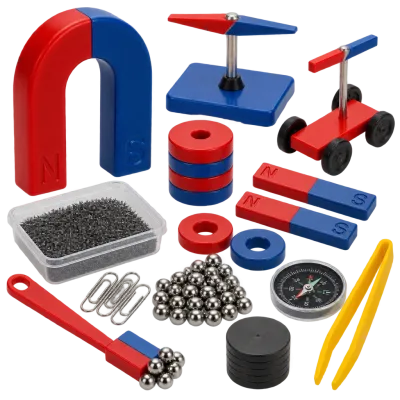 Matching productMagnet science kit for kidsAmazon →
07
Frequently asked questions
Can an electromagnet be stronger than a neodymium magnet?
Yes. Large electromagnets, especially superconducting ones, reach fields no permanent magnet can match. A small battery electromagnet, however, is usually much weaker than a neodymium magnet of the same size.
Why does my electromagnet get warm?
The wire has electrical resistance, so part of the energy becomes heat. The higher the current, the more heat. Larger devices are therefore cooled or only switched on intermittently.
Does it work with alternating current?
Yes, the magnet then keeps reversing its poles. Transformers and motors take advantage of that. For holding magnets, direct current is usually more practical because the force stays steady.
Does the nail stay magnetic after the experiment?
A little, if it is made of steel. Soft iron loses its magnetization almost completely, while hardened steel keeps a small remainder.
Sources:
Explore
Read next
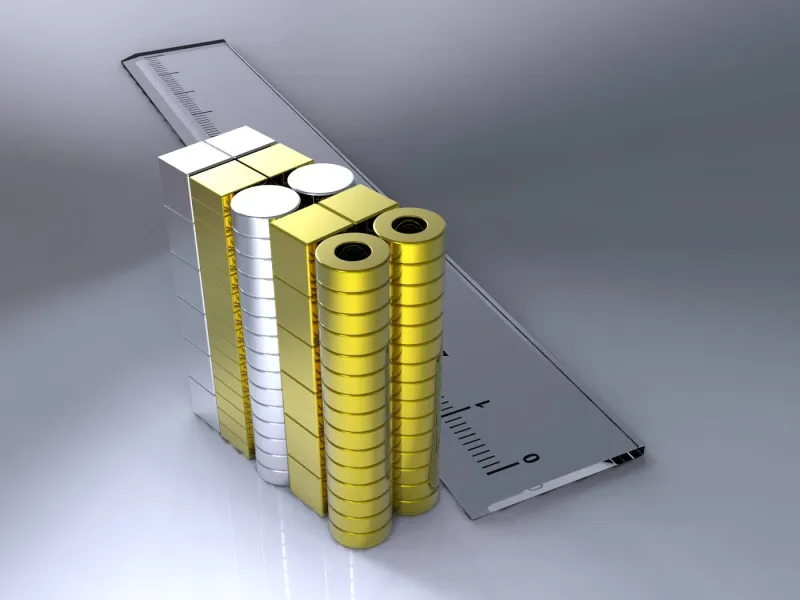 Types of MagnetsFrom bar magnets to neodymium super magnets: an overview of the most important types of magnets and their uses.
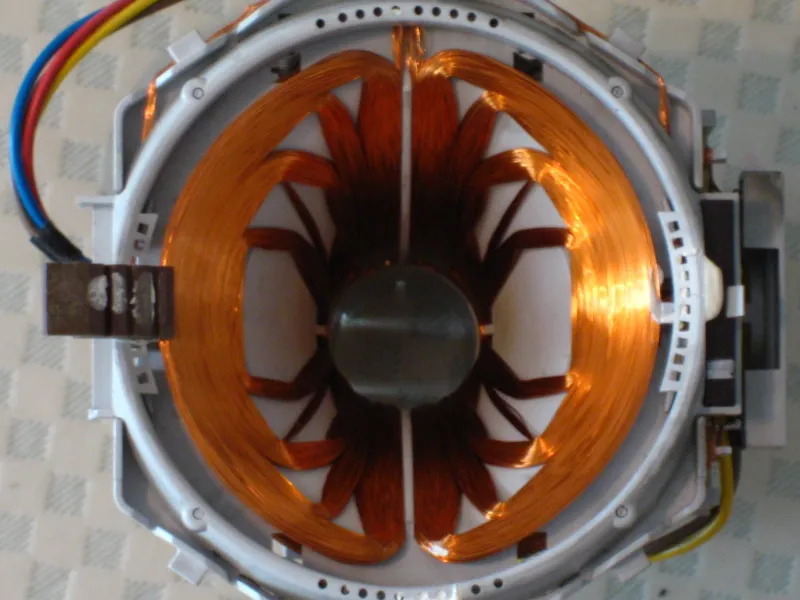 Uses of MagnetsMagnets are used far beyond speakers and fridges: learn about their role in data storage, deflection magnets and relays.
 Magnetism: What Is It?What is magnetism, how does it arise physically and what can you do with it? We take a closer look at this fascinating phenomenon.