
5 min read
Types of Magnets
From bar magnets to neodymium super magnets: an overview of the most important types of magnets and their uses.
01
Different Magnets and Types of Magnets
When many people hear the word magnet, they picture the classic horseshoe magnet, where the two poles sit more or less parallel next to each other with an air gap in between. The characteristic magnetic field forms in this air gap as well as on the outer right and left sides of the poles.
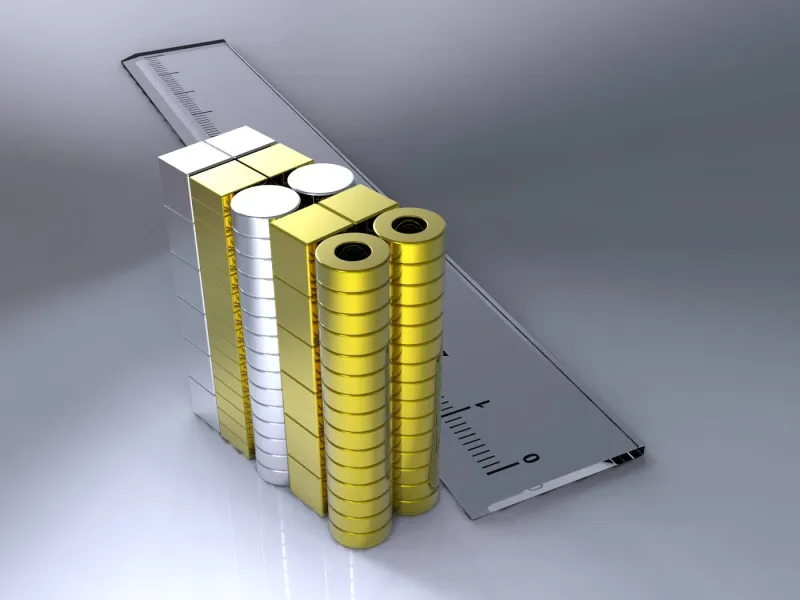
When we use magnets in everyday life, however, for example on the familiar magnetic bulletin board or magnetic board on the wall, they are usually round and disc-shaped. In industry, on the other hand, many other types of magnets are used, such as special ring magnets or bar magnets.
As we can see, there is a whole range of different types of magnets. Let's take a closer look at the most important ones below.
 Matching productMagnetic whiteboardAmazon →
02
Bar Magnets
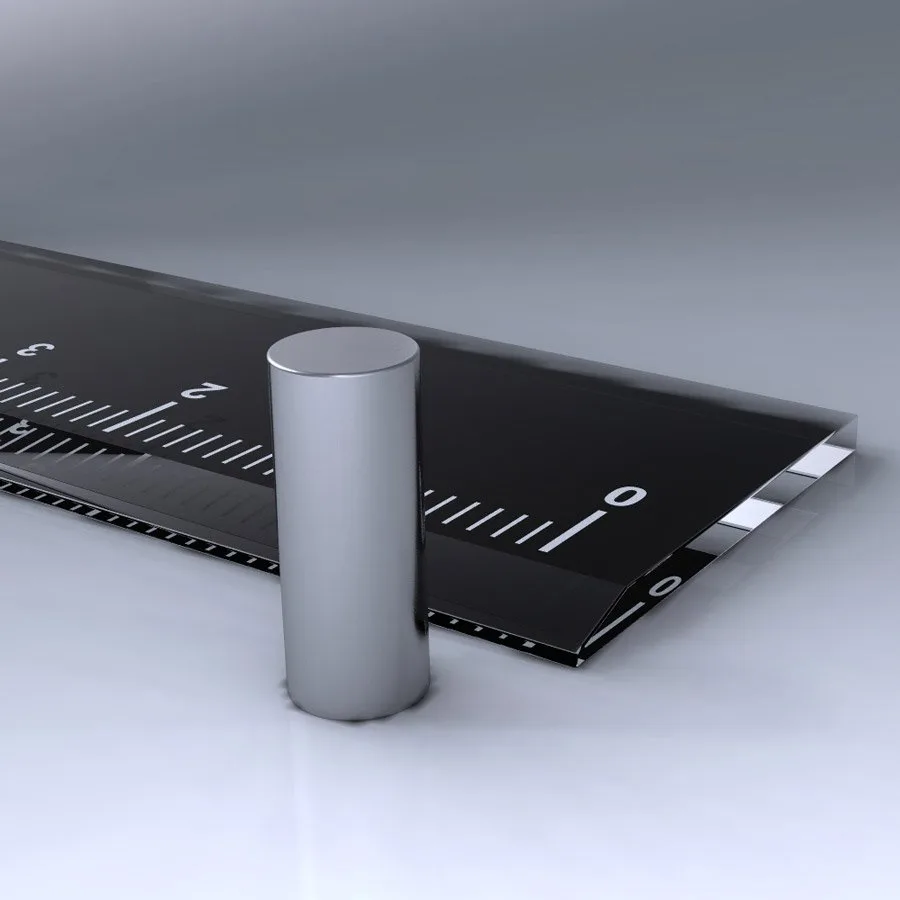
As the name suggests, bar magnets are rod-shaped or elongated. Their poles are therefore exactly opposite each other, with each end of the bar forming one pole. The cross section of a bar magnet can be cylindrical or rectangular. A characteristic feature of the bar magnet is that it has no attractive force at its center: here the forces of the two poles cancel each other out, so to speak.
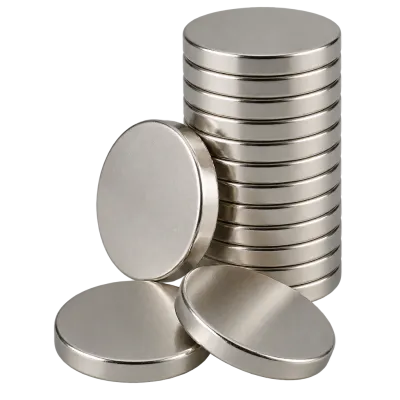
It is important to know that the classic horseshoe magnet is basically nothing more than a bent bar magnet. Disc magnets, too, are just a variation of the conventional bar magnet design, in which the radius is larger than the height of the cylinder (the base). So the poles of a disc magnet are located exactly where they are on a bar magnet: on the top and bottom.
 Matching productNeodymium disc magnets setAmazon →
03
Applications
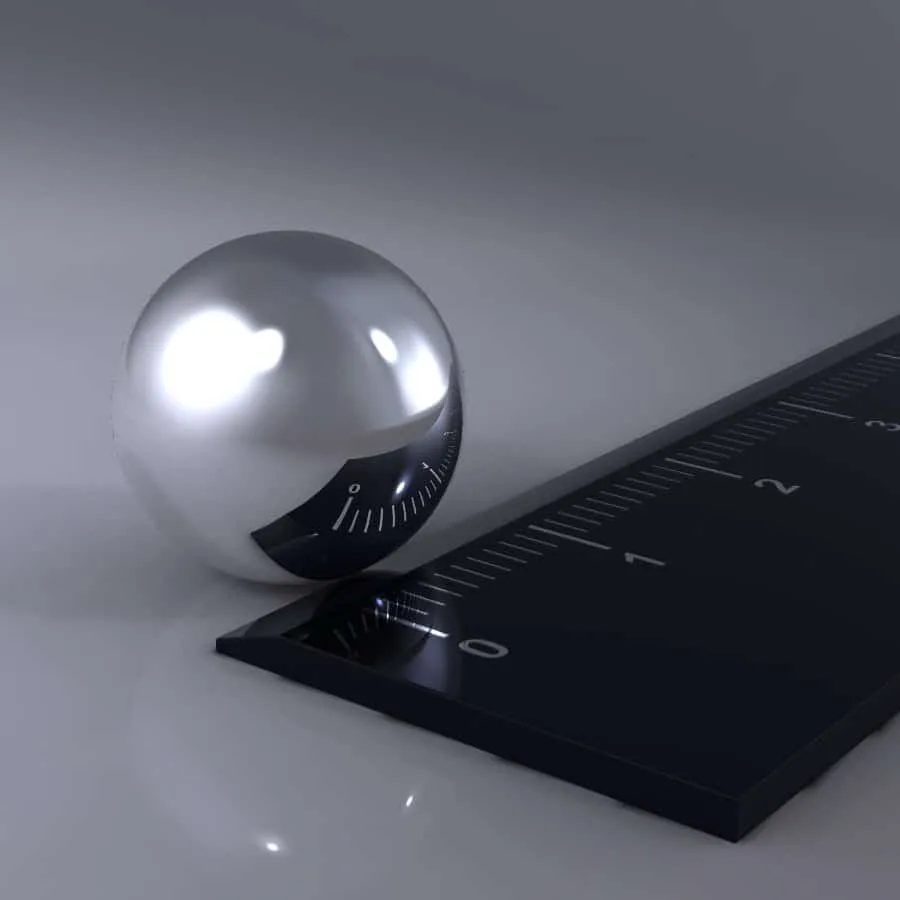
Depending on their size and material, bar magnets can be used for many different purposes. In industry, however, they are used less often than other magnet shapes. Short bar magnets and their offshoots, disc magnets, can be used as fasteners for bulletin boards, but they are also found in headphones, speakers and more. Longer bar magnets, on the other hand, are very well suited for physics experiments. They are also used in electromagnetism as cores for electromagnetic coils.
04
Permanent Magnets
The term permanent magnet does not refer to a particular shape of magnet, but to any kind of magnet that does not lose its magnetic properties over time. They must therefore be made of a magnetically hard material, such as alloyed steel, nickel, neodymium and so on.
Most permanent magnets are created by exposing a ferrimagnetic material to an existing magnetic field. Once the material is permanently magnetized, it attracts all ferromagnetic substances (such as iron) and ferrimagnetic substances (ferrites). Attraction occurs between unlike poles, while like poles repel each other.
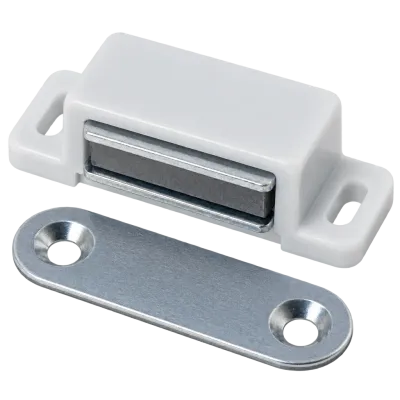
Permanent magnets are used in countless places in everyday life, science and industry. They serve, for example, as catches for cabinet doors, but are also used in various mechanical and electrical devices such as headphones, speakers or TV sets.
 Matching productMagnetic cabinet catchesAmazon →
05
Super Magnets
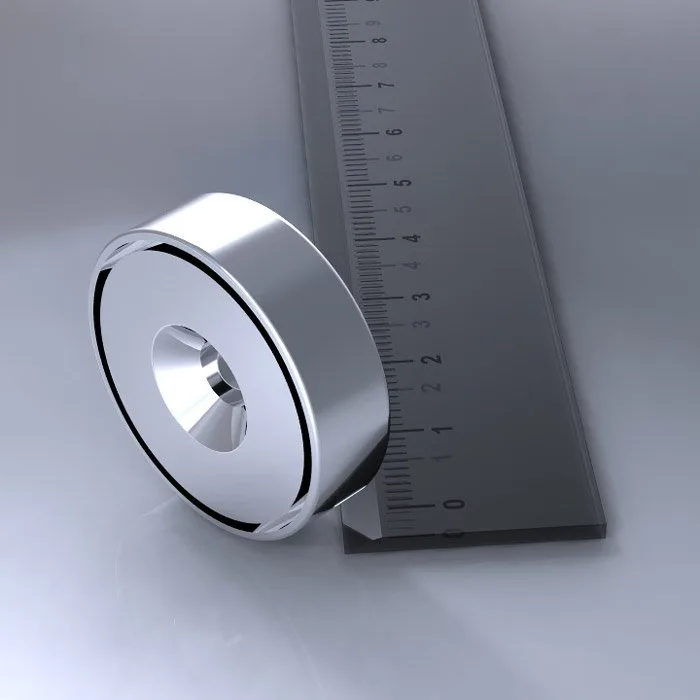
So-called super magnets have caused quite a stir in recent years. The term refers to particularly strong magnets made from newly developed, innovative materials. The best known of these materials is neodymium. The production of such magnets was made possible by new sintering processes developed in the 1980s.
Today, super magnets are still made from neodymium, but as an alloy to which iron and boron are added (chemical designation Nd2F14B). This further improves the material properties. The sintering process needed to produce the alloy was developed and patented in the USA by General Motors in cooperation with the Japanese company Sumitomo. The materials are ground into powder, magnetized in the process and then fused back together under heat and high pressure (sintered). The crystals contained in the alloy align magnetically and form a particularly strong magnetic field.
06
What Are Super Magnets Used For?
Super magnets can now be bought in many stores and in specialized online shops. But they are also increasingly used in industry. Here are a few examples:
Where huge magnets used to be installed in large power generators, super magnets are now increasingly used. They offer numerous advantages: they are easier and therefore cheaper to produce and, above all, lighter. This allows power generators with the same output to be built much more compactly. That saves space and therefore money. A practical example of super magnets in power generators is wind turbines.
07
Lightweight Construction
Lightweight construction plays an increasingly important role in many areas of modern society, for example in car manufacturing, but also in aircraft, wind turbines, buildings and more. With super magnets, joints in lightweight construction can be made much more easily, and in most cases they can be released again without leaving residue.
Magnets have always been used in electric speakers to transmit sound. New super magnet technology makes it possible to build speakers much smaller than before. You may remember the huge, old-fashioned speaker boxes that used to take up a lot of space in the living room. Today, a small spot on a shelf is enough for the speakers. And yet these speakers deliver just as much power and sound as a conventional, much larger model, and some are even better and more powerful.
08
Ring Magnets
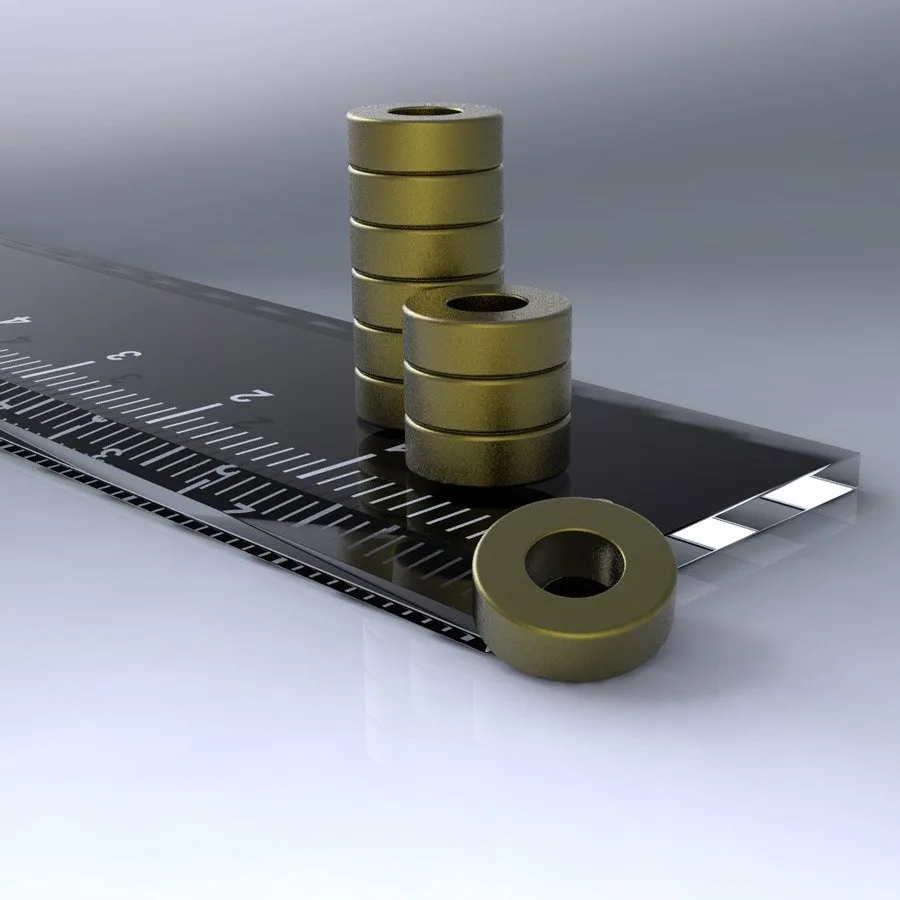
What makes ring magnets special is the orientation of the north and south poles on a flat circular surface. This is also known as axial magnetization. Basically, ring magnets can be used in just as many ways as bar, disc or horseshoe magnets. In addition, ring magnets are also used in medicine, especially in naturopathy and alternative medicine. They can be placed comfortably on many parts of the body and, thanks to their special design, their magnetic field spreads particularly evenly and gently.
09
Ferrite Magnets
The well-known conventional magnets made of alloyed iron or steel are often also called ferrite magnets. They are still used in many areas today, at home as well as in industry and science. And they offer numerous advantages over stronger magnets made of neodymium and similar materials. For example, they are much cheaper to buy. They can also be heated (up to 250 degrees), are rust-resistant and are therefore also suitable for outdoor use, in saunas and so on. We can use simple ferrite magnets for experiments, crafts and various hobbies, and in everyday life they serve us very well as fridge magnets and the like.
 Matching productFridge magnetsAmazon →
Explore
Read next
 Uses of MagnetsMagnets are used far beyond speakers and fridges: learn about their role in data storage, deflection magnets and relays.
 Magnetism: What Is It?What is magnetism, how does it arise physically and what can you do with it? We take a closer look at this fascinating phenomenon.
 Magnet GlossaryKey terms relating to magnets and magnetism, clearly explained.