
6 min read
Neodymium Magnets: Grades N35 to N52 Explained
N35, N42, N52 or N42SH: learn what the grades mean, which coating suits which job and how hot neodymium can get.
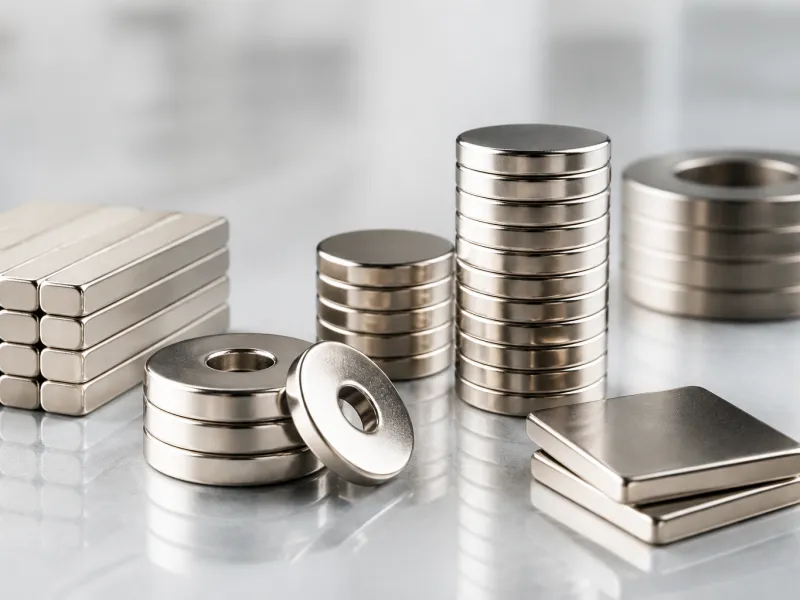
Neodymium magnets are the heavyweights of the permanent magnet world. A cube barely bigger than a sugar lump will pin a stack of paper to a steel door without effort, and two larger ones can be almost impossible to pull apart by hand. Shop for them online and you will quickly run into codes like N35, N42, N52 or N42SH, and it is fair to wonder what they actually mean.
This guide walks you through the grades, explains why N52 is not automatically the best choice, shows which coating suits which job and where the temperature limits are. By the end you will know what really matters when you buy.
01
What is inside a neodymium magnet?
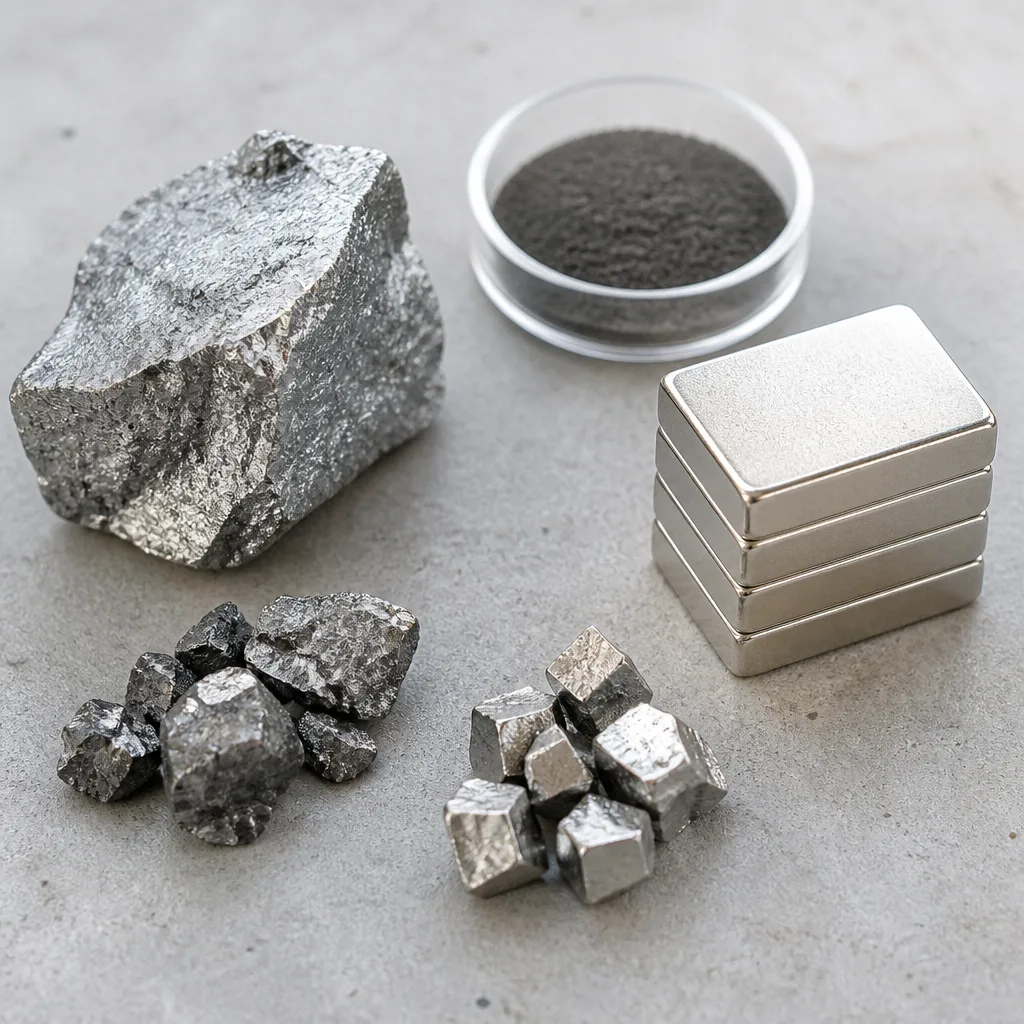
A neodymium magnet is made from an alloy of neodymium, iron and boron. Together they form a tetragonal crystal structure with the formula Nd2Fe14B, which is why you often see the abbreviation NdFeB. The material was developed in 1984, independently, by General Motors and Sumitomo Special Metals.
Most magnets you can buy are sintered: the metal powder is pressed, aligned in a magnetic field and fused at high temperature. There are also polymer bonded versions that are easier to mold into complex shapes but weaker. Sintered magnets are hard and brittle. They can chip when they slam together, and without a protective layer the material corrodes fairly easily.
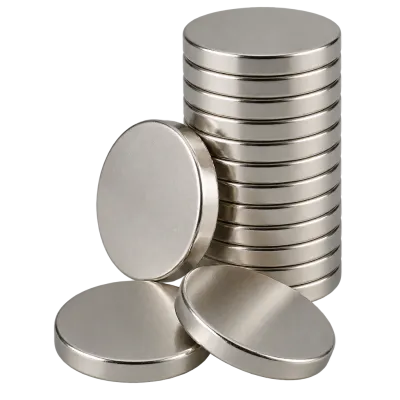 Matching productNeodymium disc magnets setAmazon →
02
Grades N35 to N52 made simple
The number after the N is the maximum energy product (BHmax) in megagauss oersteds (MGOe). Put simply, it describes how much magnetic energy is packed into a given volume. The higher the number, the stronger a magnet of the same size. Sintered neodymium magnets are offered from roughly N28 up to N55, and the grades you see most in stores are N35, N38, N42, N45, N48 and N52.
A second key value is remanence (Br), the flux density that stays in the magnet after it has been magnetized. For neodymium it is typically around 1.3 tesla. According to manufacturer data, an N35 reaches about 1.17 to 1.22 tesla and an N52 about 1.43 to 1.47 tesla.
- N35 and N38: affordable and perfectly adequate for notice boards, crafts and many everyday tasks.
- N42 and N45: a sensible balance of price and strength, very common in mounting magnets and holders.
- N48 to N52: maximum force in minimum space, worth it when size or weight is tight.
Keep in mind: grade is only one factor. The size and shape of a magnet often affect holding force far more than the step from N42 to N52. A slightly larger N42 can easily beat a smaller N52.
03
The letters after the number: M, H, SH, UH, EH
Neodymium has one weak spot: heat. As temperature rises, both coercivity (the resistance to demagnetization) and the energy product drop. If a magnet gets too hot, it permanently loses part of its strength. At the Curie temperature, which lies at roughly 310 to 400 °C (590 to 750 °F) depending on the alloy, the magnetization is gone entirely.
That is why there are grades with extra letters. They usually contain additions such as dysprosium or terbium that improve heat resistance but raise the price. The values below are typical manufacturer figures for maximum operating temperature:
| Suffix | Example | Max. operating temperature (guide value) |
|---|---|---|
| none | N42, N52 | 80 °C (176 °F) |
| M | N42M | 100 °C (212 °F) |
| H | N42H | 120 °C (248 °F) |
| SH | N42SH | 150 °C (302 °F) |
| UH | N35UH | 180 °C (356 °F) |
| EH | N35EH | 200 °C (392 °F) |
These figures apply under test conditions. In practice, shape and mounting play a role too, so leave some headroom for warm applications. Also note that high temperature grades often give up a little strength at room temperature compared with the standard version.
04
Coatings: protection against rust and wear
Sintered neodymium corrodes mainly along its grain boundaries. Without a coating, a magnet exposed to humid air would slowly start to crumble. That is why nearly all neodymium magnets carry a protective layer. The right one depends on where you plan to use the magnet.
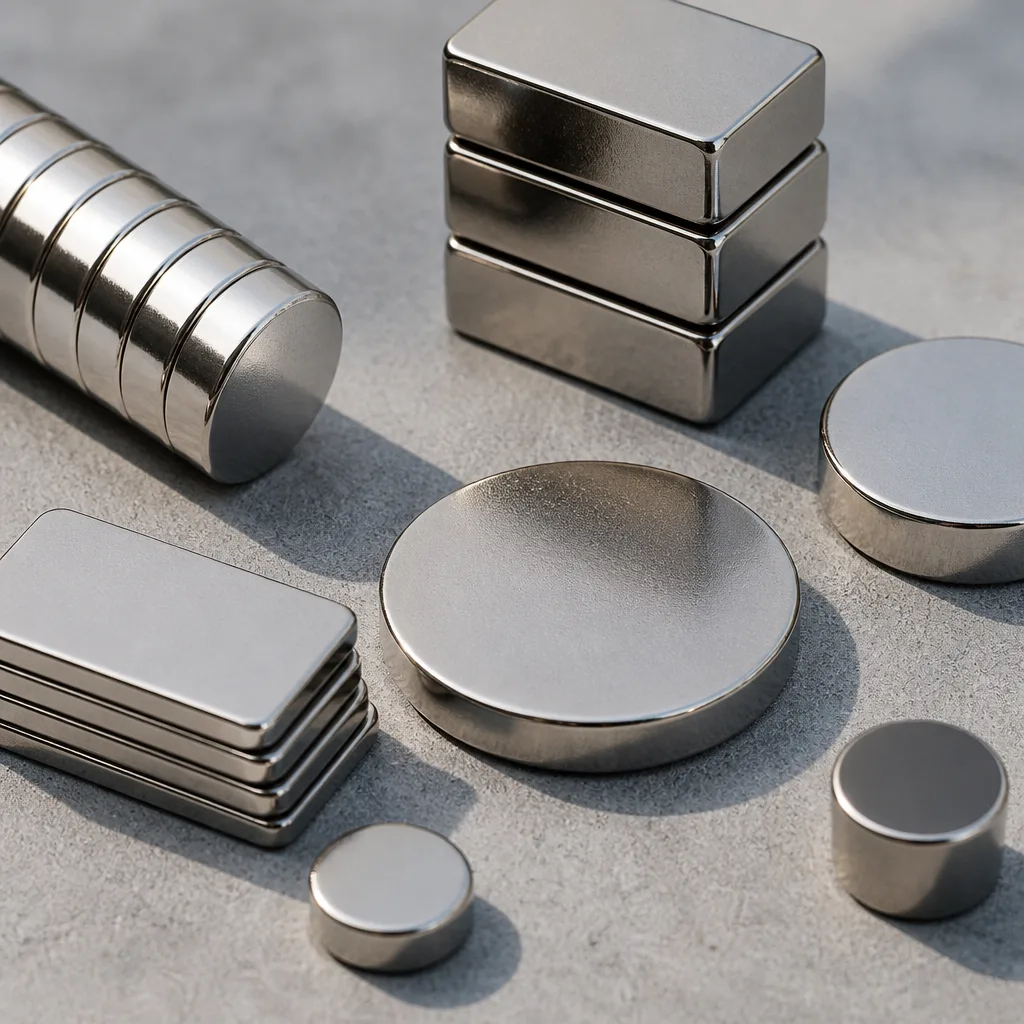
- Nickel (Ni-Cu-Ni): the standard. Shiny, about 12 micrometers thick, inexpensive and fine for dry indoor use. It does not last long in water.
- Chrome: applied over nickel, matte gray, more resistant to abrasion and impact than plain nickel.
- Epoxy: near complete corrosion protection as long as the layer is intact. It is not impact resistant, though, and flakes off easily once damaged.
- Gold and copper: decorative but delicate. The thin gold layer wears off quickly with frequent handling.
- Zinc: matte and very thin, more prone to corrosion than nickel and can leave dark residue.
- Rubber or plastic casing: protects delicate surfaces and adds grip, but the extra distance to the metal reduces holding force.
For outdoor or underwater use, such as magnet fishing, a tougher coating or a magnet set in a steel cup is worth it. Ferrite magnets, by contrast, need no coating at all because they are naturally weather resistant.
 Matching productMagnet fishing kitAmazon →
05
How to choose the right magnet
Rather than grabbing the highest grade by default, work through it step by step. These questions help:
- How much force do you really need? Plan for a margin, because datasheet values are measured under ideal conditions.
- How much space do you have? If space is tight, N52 brings real benefits. If there is room, a larger N42 is often cheaper.
- How warm will it get? Near motors, lamps or in a car in summer, an M, H or SH grade can make sense.
- How damp is the environment? Indoors nickel is enough. With moisture, epoxy, plastic housings or sealed cup magnets are better.
- Will the magnet be handled a lot? For wear and knocks, chrome or a rubber cover holds up better than gold or epoxy.
06
Handling strong magnets safely
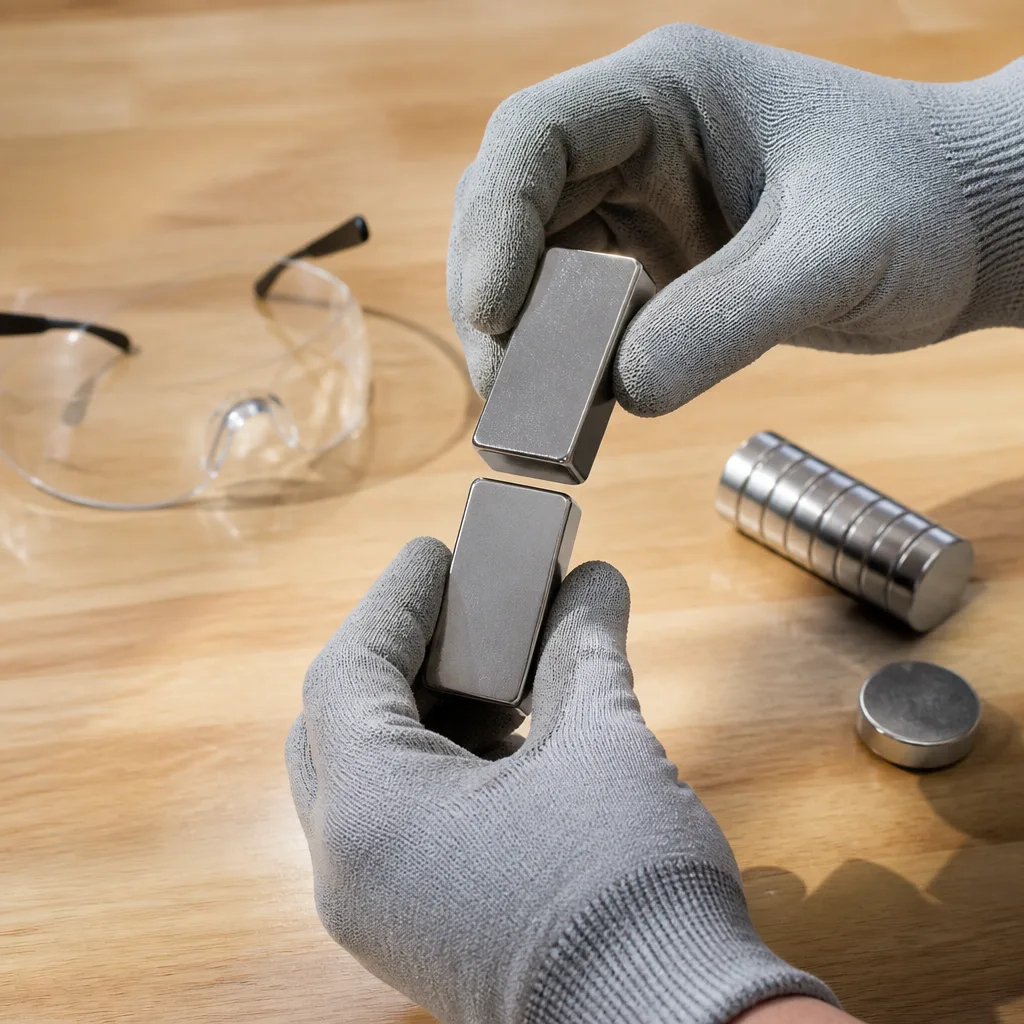
As handy as neodymium magnets are, they deserve respect. Larger ones can pinch skin and fingers painfully when they snap together, and in extreme cases even break bones. Because the material is brittle, splinters can fly off on impact. Safety glasses are a good idea with big magnets.
Swallowing is the most serious risk. If a child swallows two or more small magnets, or one magnet together with a piece of metal, they can attract each other through the intestinal walls. The tissue in between gets pinched, which can cause severe injuries that often require surgery. Keep small magnets out of reach of children and pets, and count the pieces of a set after play. If you suspect magnets have been swallowed, get medical help right away or call Poison Control. Many countries have specific rules for magnetic toys, so check the regulations where you live.
Also keep strong magnets away from pacemakers, implants, storage media and bank cards, and follow the device manufacturer's guidance.
07
Frequently asked questions
Is N52 always better than N42?
Not necessarily. N52 is stronger at the same size, but it costs more and is not more heat resistant. If you have the space, a slightly larger N42 often gives you more holding force for your money.
Does a neodymium magnet lose strength over time?
Under normal conditions, barely noticeably. Magnets mainly lose strength through excessive heat, strong opposing fields, mechanical damage or corrosion.
Can I use neodymium magnets outdoors?
Yes, but pick a durable coating or an encapsulated magnet. A simple nickel layer can start to rust over time when it gets wet.
How can I tell which grade a magnet is?
Not by looking at it. Reputable sellers list the grade on the datasheet. Be cautious with very cheap offers that give no specifications.
Sources:
Explore
Read next
 Types of MagnetsFrom bar magnets to neodymium super magnets: an overview of the most important types of magnets and their uses.
 Uses of MagnetsMagnets are used far beyond speakers and fridges: learn about their role in data storage, deflection magnets and relays.
 Magnetism: What Is It?What is magnetism, how does it arise physically and what can you do with it? We take a closer look at this fascinating phenomenon.