
6 min read
Magnet Materials Compared: Which One Fits?
Ferrite, AlNiCo, samarium cobalt, neodymium or magnetic sheet? Our comparison shows strength, heat resistance, price and corrosion at a glance.
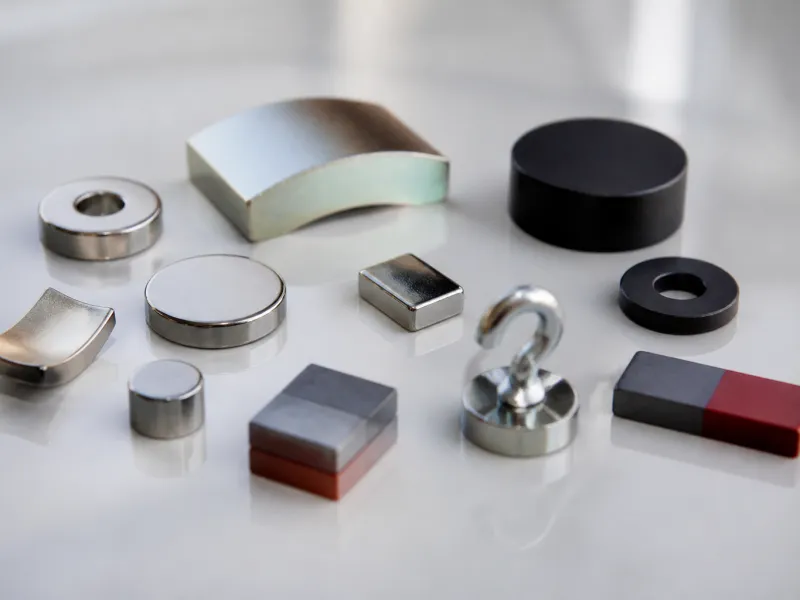
Not all magnets are created equal. The black button on your corkboard, the bendy promo magnet on your fridge, the shiny super magnet from an online shop and the red horseshoe magnet from science class are made of completely different materials. Each one has its own strengths and weaknesses.
In this guide, you will meet the five most important magnet materials: ferrite, AlNiCo, samarium cobalt, neodymium and flexible magnets. You will learn how strong they are, how much heat they can take, how they handle rust, what they cost and where they are typically used. A comparison table sums it all up.
01
Ferrite: the budget all rounder
Ferrite magnets, often called ceramic magnets, are the workhorses of the magnet world. They consist mainly of iron oxide combined with barium or strontium to form a ceramic. Because the raw materials are cheap and plentiful, ferrites are among the most affordable permanent magnets you can buy.
Their magnetic strength is moderate compared with rare earth magnets, with a remanence of about 0.35 tesla. In return, they offer excellent corrosion resistance. Since they are already an oxide, they practically cannot rust and need no coating. They also handle heat quite well, with a maximum operating temperature of roughly 250 °C (about 480 °F).
- Pros: very cheap, rustproof, good heat tolerance
- Cons: hard and brittle, much weaker than neodymium
- Typical uses: fridge magnets, loudspeakers, small electric motors, automotive sensors
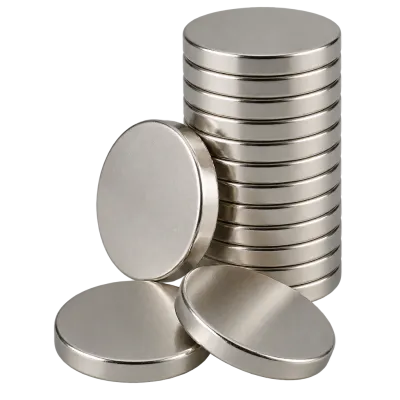 Matching productNeodymium disc magnets setAmazon →

02
AlNiCo: the heat loving classic
AlNiCo stands for aluminum, nickel and cobalt, which form the alloy together with iron and a little copper. Its story began in Japan in 1931, when researcher Tokushichi Mishima found an iron nickel aluminum alloy with a coercivity that was impressive for its time. For decades, AlNiCo magnets were the strongest permanent magnets available.
Their big advantage is heat. The Curie temperature sits around 800 °C, and sources put the practical operating limit at roughly 525 to 540 °C. That means they stay magnetic where other materials have long given up. Remanence can exceed 1.2 tesla, but coercivity is low. In plain terms, AlNiCo is fairly easy to demagnetize, for example by a strong opposing field or an unfavorable shape. That is why classic AlNiCo magnets are often long and slim or shaped like a horseshoe.
- Pros: highest operating temperature, very stable output when temperatures change, good corrosion resistance
- Cons: easy to demagnetize, relatively low energy density
- Typical uses: guitar pickups, microphones, measuring instruments, sensors, classroom magnets
03
Samarium cobalt: strong and heat resistant
Samarium cobalt magnets, or SmCo for short, were developed in the United States in the 1960s. They come in two main types, SmCo5 and Sm2Co17. Like neodymium, they are rare earth magnets, but they are not quite as powerful: their energy density is roughly two thirds that of a neodymium magnet.
Where they really shine is in hot and humid conditions. Depending on the grade, the maximum operating temperature is around 250 to 350 °C, and special grades go even higher. The Curie temperature reaches 700 to 800 °C. SmCo magnets also resist corrosion very well and usually do not need a coating. The catch: they are brittle, chip easily and are expensive, partly because cobalt prices fluctuate a lot.
- Pros: high strength, excellent heat resistance, minimal corrosion
- Cons: high price, very brittle
- Typical uses: aerospace, precision sensors, high performance motors, medical technology
04
Neodymium: the powerhouses
Neodymium magnets (NdFeB) were developed independently in 1984 by General Motors and Sumitomo Special Metals. They are the strongest permanent magnets on the market. Remanence ranges from about 1.0 to 1.4 tesla, and their energy density beats every other material. Grades run roughly from N35 to N52, and the number reflects the maximum energy product.
There are two weak spots you should know about. First, neodymium corrodes easily, especially along its grain boundaries. That is why these magnets are almost always coated, usually with nickel copper nickel. Second, they are sensitive to heat: standard grades are rated for only about 80 °C (176 °F). High temperature grades with extra letters such as H, SH or EH can handle up to around 200 °C, depending on the grade. They are also brittle and can shatter if they snap together.
- Pros: huge strength in a tiny package, affordable
- Cons: needs a coating, limited heat tolerance, brittle
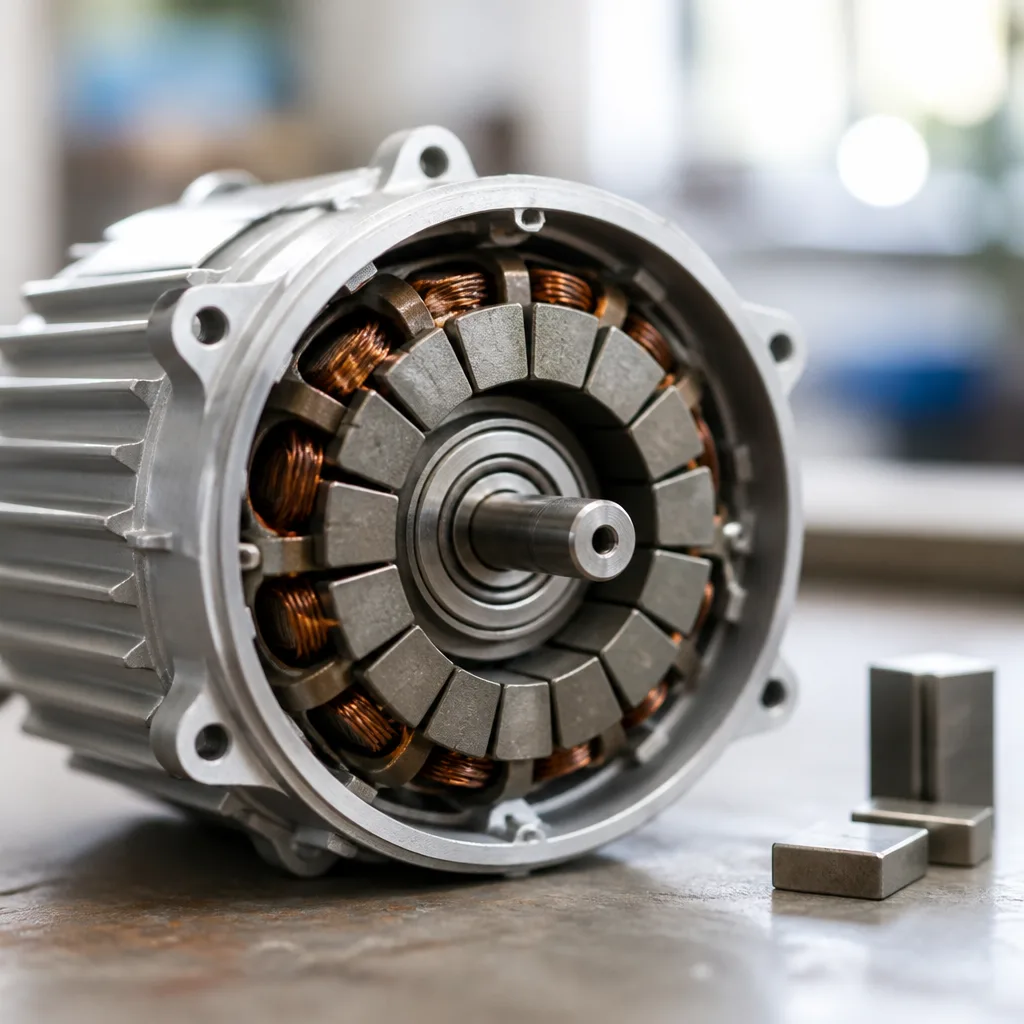
- Typical uses: electric motors, wind turbines, headphones, hard drives, cordless tools, magnet fishing
 Matching productElectric motor kitAmazon →
05
Flexible magnets: bendable and versatile
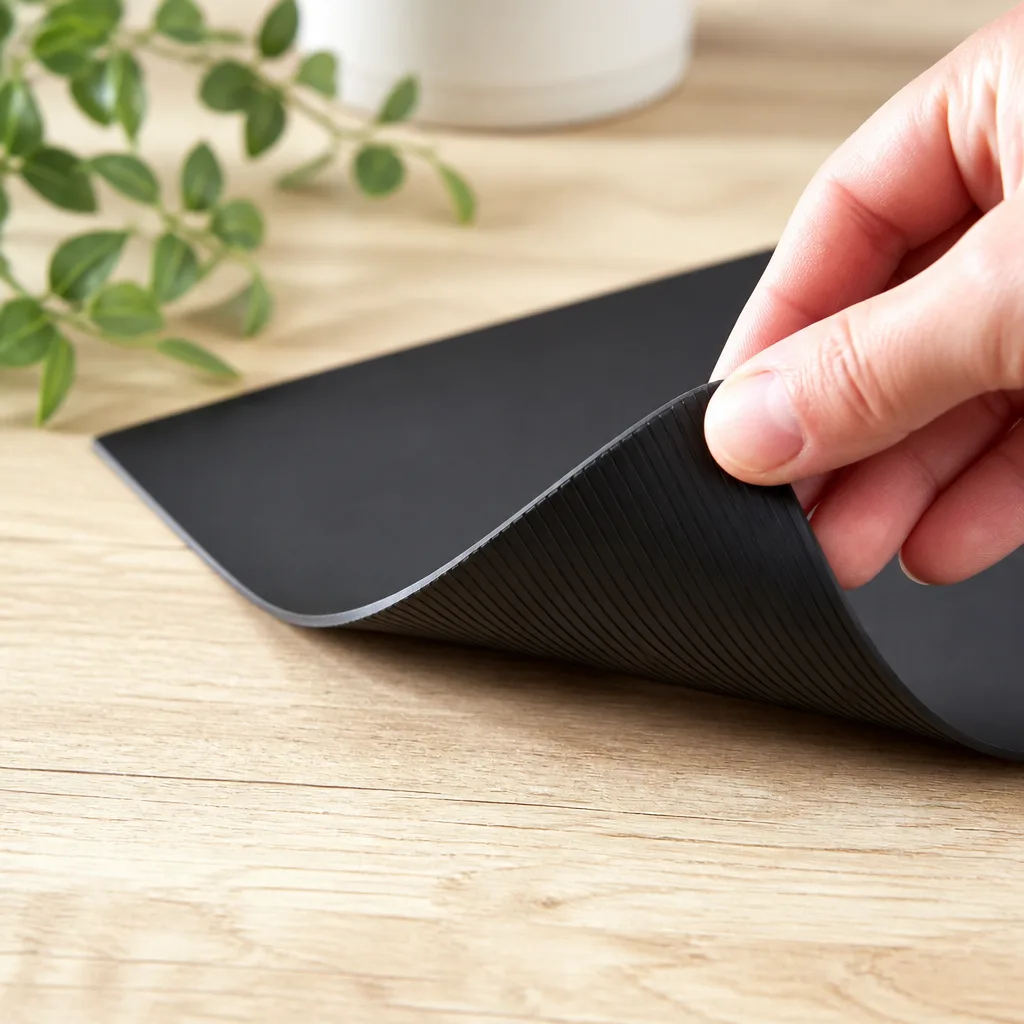
Flexible magnets, also known as magnetic sheet or rubber magnets, are made of ferrite powder embedded in a plastic or rubber binder. Most are magnetized on one side in fine stripes of alternating north and south poles, which is why only one side sticks well.
Their holding force is much lower than that of solid magnets, but it grows with thickness and surface area. The big plus: you can cut them with scissors or a utility knife, print on them and lay them on curved surfaces. They shrug off moisture and are inexpensive. Heat is their limit, though. Around 80 °C (176 °F), the binder softens and the magnet starts to lose performance.
- Typical uses: vehicle signs, shelf labels, promotional magnets, whiteboard accessories, refrigerator door seals
06
Understanding and comparing key properties
When you read data sheets, three terms keep coming up. They are worth understanding once:
- Remanence (Br): how much magnetization stays in the material after it has been magnetized, given in tesla. Roughly speaking, higher remanence means a stronger field at the surface.
- Coercivity: how well a magnet resists being demagnetized. A material with high coercivity stays stable even in opposing fields or in a flat shape.
- Curie temperature: above this point, a material loses its magnetic order completely. The practical operating temperature is always well below it.
The energy product, often written as (BH)max, combines remanence and coercivity into a single figure for the stored magnetic energy. It is the best single number for comparing the strength of different materials.
The table below shows all five materials at a glance. The values are rough guidelines. They can vary a lot by grade, manufacturer and shape, so always check the data sheet for a specific application.
| Material | Strength | Max. operating temperature | Price | Corrosion |
|---|---|---|---|---|
| Ferrite | medium | approx. 250 °C | very low | rustproof |
| AlNiCo | medium, easy to demagnetize | approx. 525 °C | medium | good resistance |
| Samarium cobalt | high | approx. 250 to 350 °C | high | very good resistance |
| Neodymium | very high | approx. 80 °C (special grades up to approx. 200 °C) | medium | rusts without coating |
| Flexible | low | approx. 80 °C | low | unaffected |
 Matching productTelescopic magnetic pickup toolAmazon →
07
Which material is right for you?
For most everyday jobs, a simple rule of thumb will do:
- Maximum force in a small size: neodymium, for magnet fishing, holding thick stacks of paper or craft projects.
- Cheap, tough and used outdoors: ferrite.
- Large areas, printing, cutting to size: flexible magnets.
- High temperatures: samarium cobalt or AlNiCo.
- Classic tone and nostalgia: AlNiCo, for example in guitar pickups.
With strong magnets, keep safety in mind too: large neodymium magnets can pinch fingers painfully, and swallowed magnets are dangerous for children. Always store them out of reach of young kids.
 Matching productMagnet fishing kitAmazon →
08
Frequently asked questions
Which magnet is the strongest?
Neodymium magnets are the strongest permanent magnets you can buy. Samarium cobalt comes in second.
Which magnets do not rust?
Ferrite practically does not rust, and samarium cobalt is highly resistant as well. Neodymium, on the other hand, needs a protective coating or it will corrode.
Does heat weaken a magnet?
Yes. Up to the maximum operating temperature, the loss is usually reversible. Go well beyond it and part of the strength is lost for good. Above the Curie temperature, the magnetization disappears completely.
Can I cut magnetic sheet myself?
Yes, flexible magnets can be cut with scissors, a utility knife or a punch. Solid magnets, however, should not be drilled or sawed, since they can chip or shatter.
Sources:
Explore
Read next
 Types of MagnetsFrom bar magnets to neodymium super magnets: an overview of the most important types of magnets and their uses.
 Uses of MagnetsMagnets are used far beyond speakers and fridges: learn about their role in data storage, deflection magnets and relays.
 Magnetism: What Is It?What is magnetism, how does it arise physically and what can you do with it? We take a closer look at this fascinating phenomenon.