
5 min read
Magnets in Medicine: MRI, TMS and the Myths
From MRI scanners to magnetic bracelets: an honest look at where magnets truly help in medicine and where the evidence falls short.
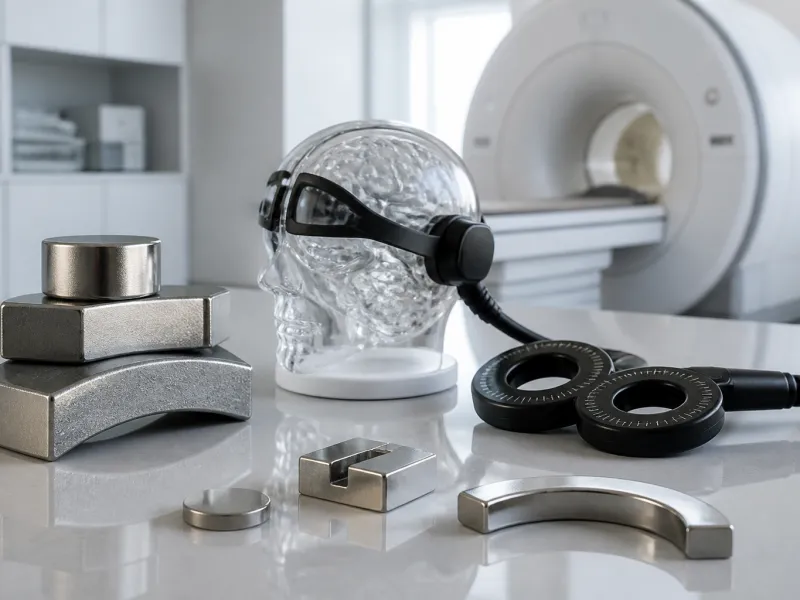
When it comes to magnets and health, cutting-edge technology and wishful thinking sit surprisingly close together. On one side are MRI scanners that help countless people get an accurate diagnosis every day. On the other are magnetic bracelets and magnetic pillows that promise to ease pain.
In this guide we look at what magnets really do in medicine, how magnetic brain stimulation works, and what research says about magnetic therapy products. One important note first: this article does not replace advice from a medical professional.
01
MRI: looking inside the body with magnetic force
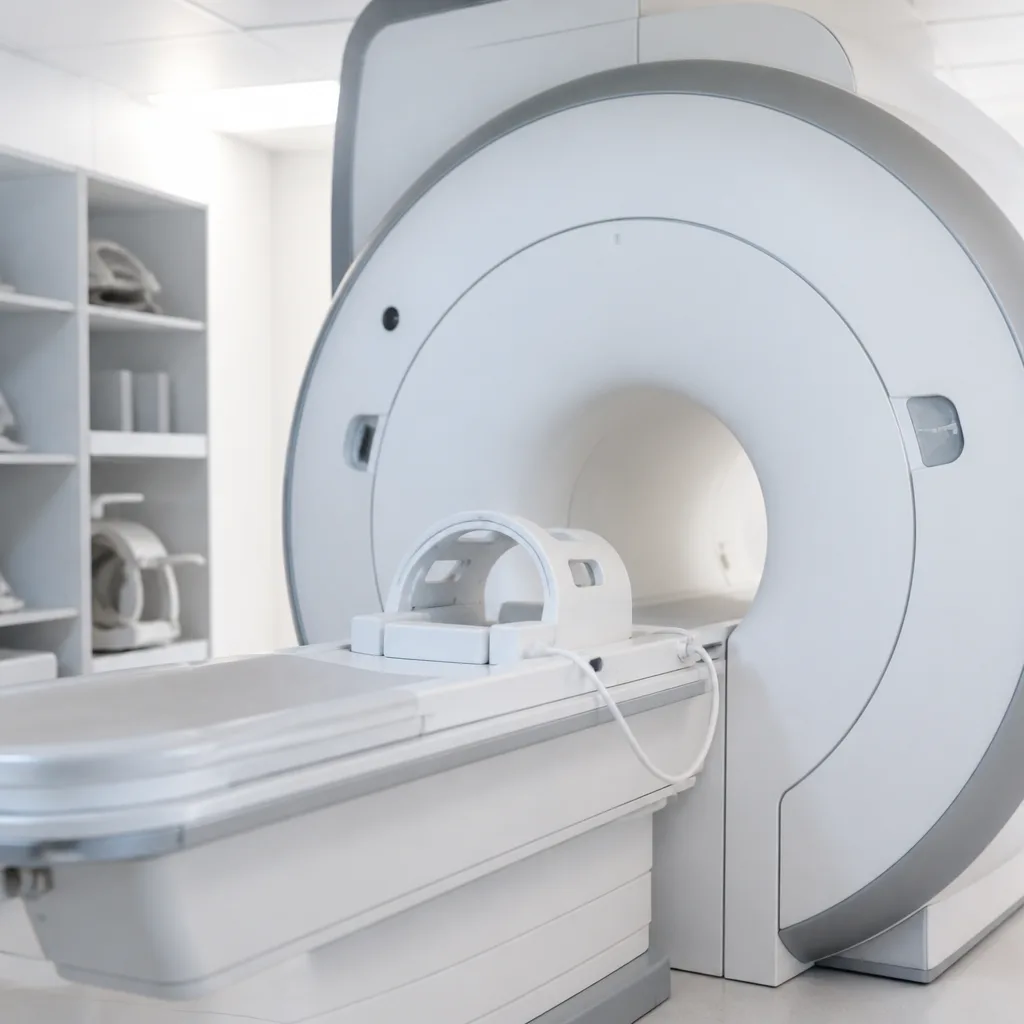
Magnetic resonance imaging, or MRI, creates detailed cross-sectional images of the inside of the body. It does this by using hydrogen nuclei, in other words protons, which are present in huge numbers in our tissues.
Here is the simplified version: the strong magnetic field lines up the protons. The scanner then sends short radio frequency pulses that knock them out of alignment. As the protons return to their original state, they release energy that receiver coils pick up. Because this happens at different speeds in different tissues, a computer can turn the signals into an image with fine contrast.
A big advantage: unlike X-rays and CT scans, MRI does not use ionizing radiation. It is especially good at showing soft tissue such as the brain, spinal cord, muscles, ligaments and joints.
02
How strong is an MRI magnet?
Clinical scanners usually operate at 1.5 or 3 tesla. For comparison, the Earth's magnetic field is on the order of 0.00005 tesla, tens of thousands of times weaker. Since 2017, ultra-high-field scanners at 7 tesla have also been approved for clinical exams.
| Magnetic field | Approximate flux density |
|---|---|
| Earth's magnetic field | about 0.00005 tesla |
| typical fridge magnet | about 0.001 tesla |
| clinical MRI scanner | 1.5 to 3 tesla |
| ultra-high-field MRI | 7 tesla and above |
Fields like these do not come from permanent magnets but from superconducting electromagnets. Their coils are cooled to extremely low temperatures with liquid helium, so current flows with practically no resistance. That is why the field stays on even when no one is being scanned. An MRI magnet is always "on."
 Matching productFridge magnetsAmazon →
03
Staying safe around MRI
The strong field is the reason for the strict rules in the MRI room. Objects made of iron or steel can be pulled in with tremendous force. The U.S. National Institutes of Health notes that the field is strong enough to fling a wheelchair across the room.
- Remove metal: Keys, coins, hair clips, watches, cards and of course any kind of magnet stay outside. Magnetic jewelry does not belong in the scanner either.
- Report implants: Pacemakers, cochlear implants, nerve stimulators or metal fragments must be disclosed beforehand. Some modern implants are MRI safe under specific conditions, but the medical team always makes that call.
- Noise: Scanners knock and hum loudly, up to about 120 decibels according to the NIH. Hearing protection is standard.
- Contrast agents: A gadolinium-based agent is often injected. People with severe kidney problems need extra caution.
A typical exam takes about 10 to 30 minutes depending on the body region; a lower spine scan, for example, takes around 20 minutes. You lie on a table that slides into the bore and should keep as still as possible so the images come out sharp. If you are claustrophobic, mention it ahead of time. Talking it through, music over headphones, or a call button in your hand that lets you reach the staff at any moment often helps.
By the way: because the superconducting magnet keeps running even during a power outage, there is an emergency shutdown for real emergencies that deliberately collapses the field. It is costly and complicated, but it shows how seriously safety is taken.
04
Magnetic brain stimulation (TMS)
Transcranial magnetic stimulation, or TMS, uses short, powerful magnetic pulses from a coil held against the head. The changing field induces weak electric currents in the brain and stimulates nerve cells in a targeted region. No surgery or anesthesia is needed, and you stay awake during the session.
In the United States, the FDA has cleared TMS mainly for major depression when other treatments have not helped enough. Clearances also cover conditions such as obsessive-compulsive disorder, migraine and smoking cessation. According to Mayo Clinic, a typical course involves sessions five days a week for four to six weeks.
Common side effects include headaches, scalp discomfort and tingling in the face. Seizures are rare but serious. Whether TMS is offered and covered varies from country to country, so check with specialists and your health insurance.

05
Magnetic therapy: what the research says
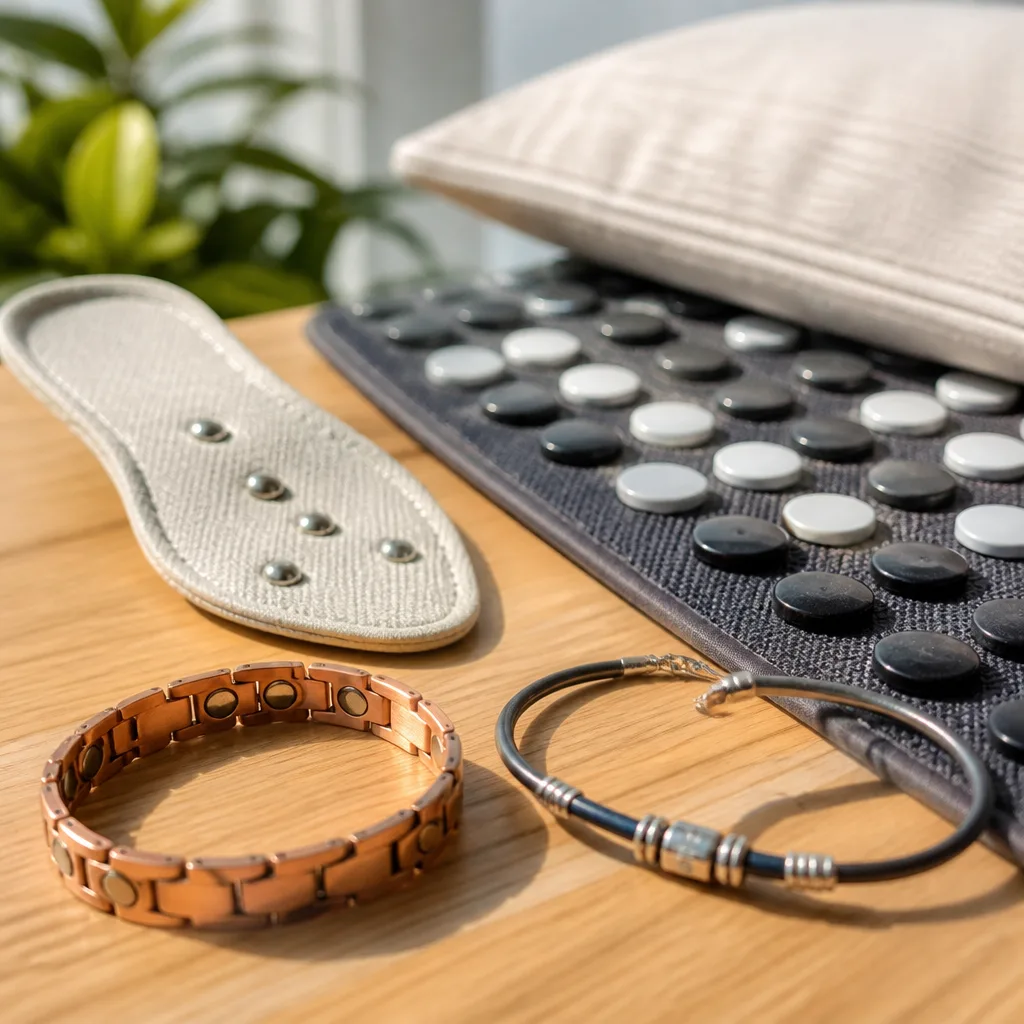
Magnetic bracelets, magnetic insoles, magnetic mattress pads: the idea that a permanent magnet on the skin relieves pain or boosts circulation is old and remarkably persistent. The scientific picture, however, is sobering.
The range of products is wide: bracelets and necklaces with embedded magnets, blankets and mattress toppers, shoe insoles and even supposedly magnetized water. The promises range from better sleep and more energy to relief from joint pain. The key difference from TMS: these products use weak, static fields that do not change, so they do not create currents in the body.
- Pain: The U.S. National Center for Complementary and Integrative Health (NCCIH) points to a 2021 review of seven studies. Four showed improvement and three did not. That is not solid evidence.
- Earlier reviews: Reviews on pain and arthritis likewise concluded that the data were inconclusive or did not show a clear effect.
- Circulation: A study using fields of up to 1 tesla found no effect on local blood flow. The iron in hemoglobin is not magnetic the way a nail is, and therapy magnets are far too weak to measurably affect blood.
Many authorities only allow health claims for such products when they are backed by evidence. If a seller advertises healing effects, be skeptical. Legal rules differ from country to country.
 Matching productMagnetic stud finderAmazon →
06
What to watch out for
For most people a magnetic bracelet is harmless. There are still a few real risks:
- Medical devices: Strong magnets can interfere with pacemakers, defibrillators or insulin pumps. Keep enough distance and ask your care team if in doubt.
- Children: Small magnets that are swallowed can attract each other inside the intestines and cause serious injuries. Keep them out of reach.
- Do not delay care: If you have ongoing pain, have the cause checked by a doctor instead of relying on magnets alone.
 Matching productMagnetic car phone mountAmazon →
07
Frequently asked questions
Is an MRI dangerous?
For most people it is considered very safe because it uses no X-rays. The main risks come from metal and implants, which is why the screening questionnaire before the exam matters so much.
Can I wear magnetic jewelry during an MRI?
No. All magnets and metal objects must be removed beforehand.
Do magnetic bracelets help with joint pain?
Based on current evidence, there is no convincing proof. Study results are mixed.
Is TMS the same as magnetic therapy?
No. TMS uses strong, rapidly changing pulses to create targeted currents in the brain and is performed under medical supervision. A static magnet on your wrist cannot do that.
Sources:
Explore
Read next
 Types of MagnetsFrom bar magnets to neodymium super magnets: an overview of the most important types of magnets and their uses.
 Uses of MagnetsMagnets are used far beyond speakers and fridges: learn about their role in data storage, deflection magnets and relays.
 Magnetism: What Is It?What is magnetism, how does it arise physically and what can you do with it? We take a closer look at this fascinating phenomenon.