
6 min read
Magnetizing and Demagnetizing Made Simple
Make a screwdriver magnetic in seconds and understand why magnets weaken: heat, the Curie temperature, impacts and demagnetizers.
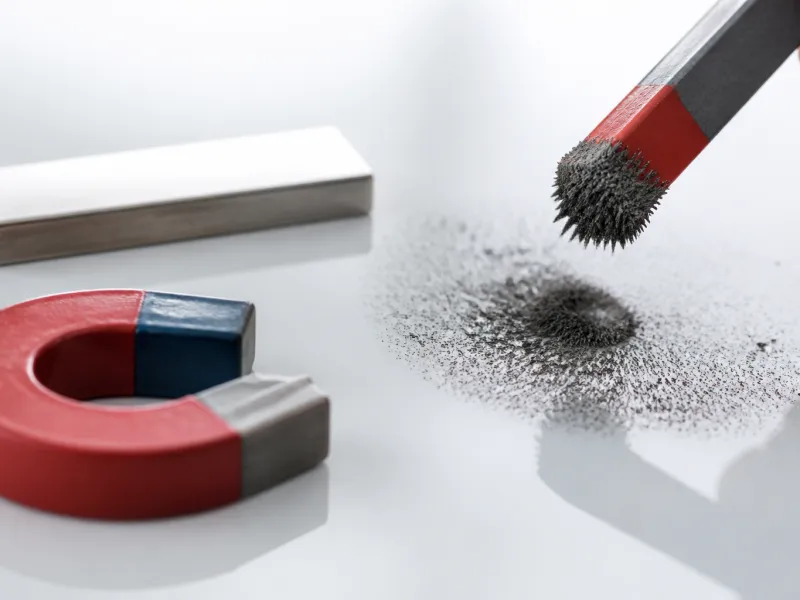
The screw drops into the engine bay for the third time, and all you want is a screwdriver that just holds on to it. The good news: you can fix that yourself in a few seconds. The flip side: magnetism can be created, but it can also fade away again.
In this guide you will learn how magnetizing works, how to make tools magnetic on purpose and demagnetize them again, and why even strong permanent magnets can lose their strength. It covers heat, the Curie temperature, shocks and opposing fields.
01
What happens inside the metal
Inside iron and steel there are tiny regions where the magnetic moments of the atoms already point the same way. These are called magnetic domains, or Weiss domains. In an unmagnetized piece of metal, the domains point in random directions, so their effects cancel out.
When you bring a strong magnetic field close, many of these domains line up with it. The metal becomes a magnet itself. The magnetism left over after the outside field is removed is called remanence. The strength of the opposing field needed to undo that alignment is called coercivity.
That is where materials differ: soft iron magnetizes easily but loses it quickly. Hardened tool steel holds its magnetization better. Permanent magnets made of neodymium or ferrite have very high coercivity, which is why they stay magnetic for a long time.
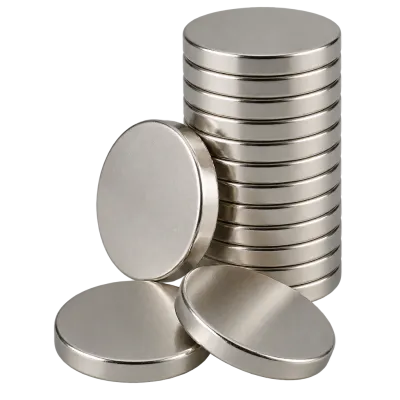 Matching productNeodymium disc magnets setAmazon →
02
How to magnetize a screwdriver
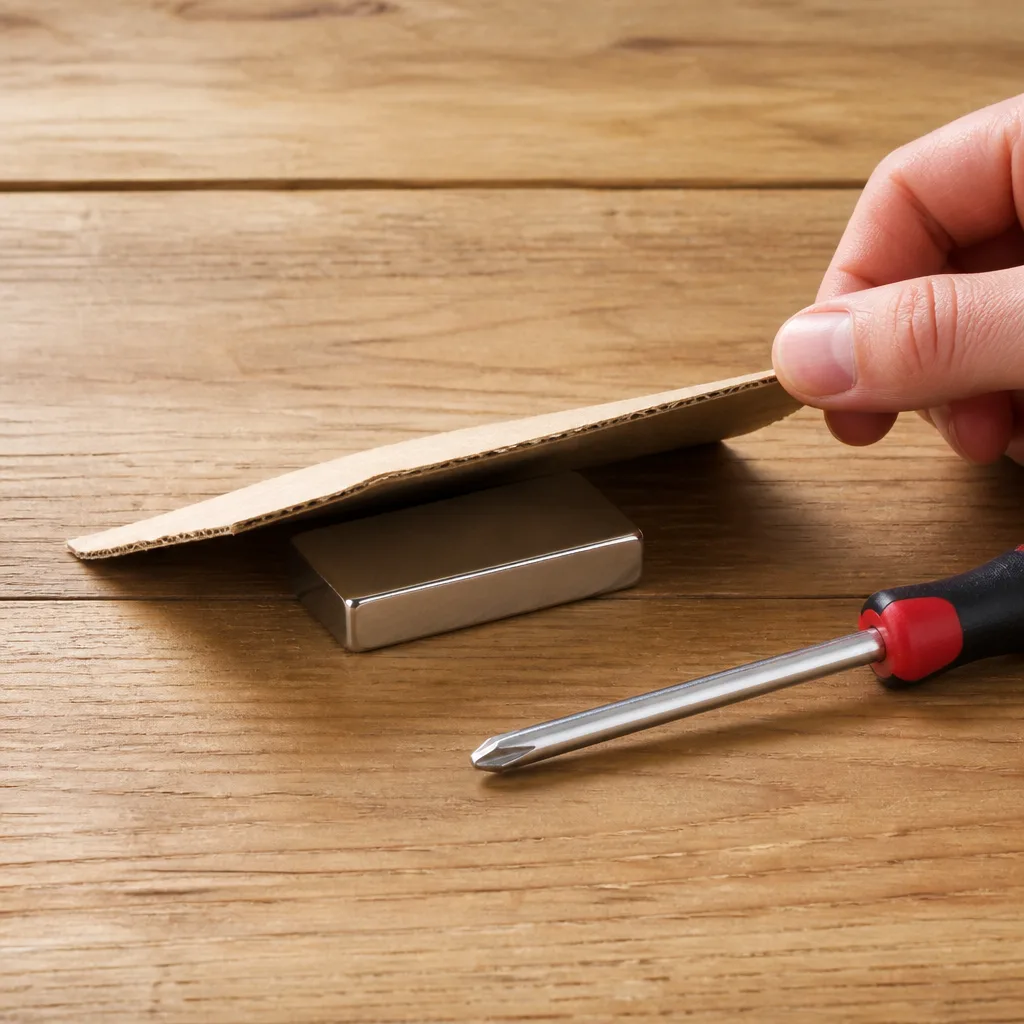
To make a magnetic screwdriver, all you need is a strong magnet, such as a neodymium block magnet, and a piece of thin cardboard or cloth as a buffer. The cardboard keeps the magnet from scratching the blade and from pinching your fingers when it snaps on.
- Step 1: Lay the magnet on your workbench and cover it with the cardboard.
- Step 2: Place the blade near the handle and draw it in one direction toward the tip across the magnet.
- Step 3: At the end, lift the screwdriver well clear and bring it back to the start in an arc.
- Step 4: Repeat a few times, always in the same direction. Rubbing back and forth would cancel out the effect.
- Step 5: Test it with a small screw to see if the tip holds it.
An even easier option is a ring magnet slipped over the blade. As long as it stays there, the tool is magnetic. Keep in mind that a regular screwdriver does not hold its magnetization forever. It fades over time, but you can repeat the process whenever you like.
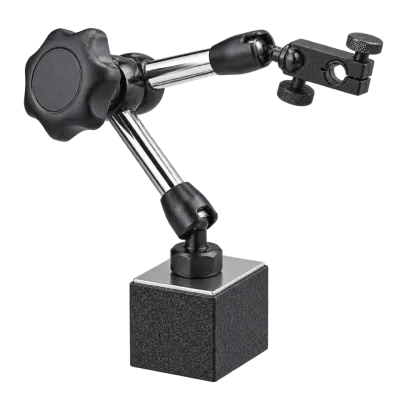 Matching productMagnetic tool holderAmazon →
03
Why magnets lose strength
Under normal conditions, a permanent magnet loses very little strength. Neodymium magnets that are used properly keep their power for a very long time. Still, three things can harm them.
- Heat: As temperature rises, atoms vibrate more and the order within the domains breaks down. This is the most important cause of lost strength.
- Opposing fields: A strong magnetic field pointing against the magnetization can partly flip the alignment.
- Hard impacts: Heavy mechanical blows can also partly demagnetize the material. Brittle neodymium magnets can also chip or shatter.
Cold can matter as well, but it depends on the material: according to supermagnete.de, ferrite magnets permanently lose some magnetization below about minus 40 °C (minus 40 °F), while neodymium magnets even survive a dip in liquid nitrogen and regain their full holding force once they warm up.
04
Heat and the Curie temperature
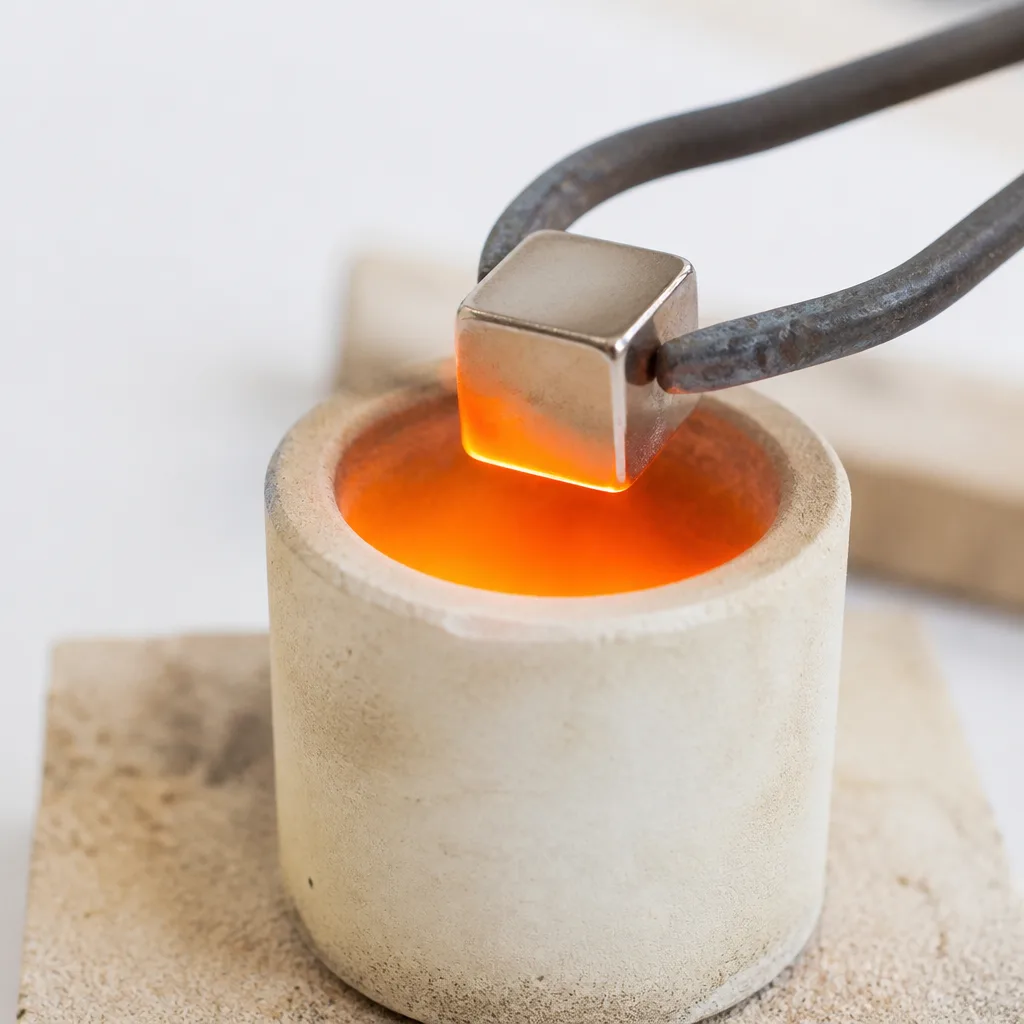
Every ferromagnetic material has what is called a Curie temperature. Above that limit, spontaneous magnetization vanishes completely and the material only behaves paramagnetically. Thermal motion is then so strong that the magnetic moments can no longer line up together.
| Material | Curie temperature (approx.) |
|---|---|
| Nickel | 354 °C (669 °F) |
| Neodymium magnet (NdFeB) | 310 to 400 °C (590 to 752 °F) |
| Strontium ferrite | 450 °C (842 °F) |
| Samarium cobalt (SmCo) | 720 to 800 °C (1328 to 1472 °F) |
| Iron | 770 °C (1418 °F) |
| Cobalt | 1130 °C (2066 °F) |
In practice, though, the Curie temperature is not what matters most. The much lower maximum operating temperature is. For neodymium magnets it depends on the grade: standard magnets without a letter suffix handle about 80 °C (176 °F), while grades marked M, H, SH, UH or EH handle progressively more, up to around 200 °C (392 °F). According to the manufacturer, especially strong grades such as N52 are more sensitive.
supermagnete.de describes three stages. Slightly above the operating temperature, the magnet weakens only temporarily and fully recovers as it cools. Well above it, part of the loss stays and can only be fixed by remagnetizing. Close to the Curie temperature, the structure changes so much that the magnet cannot be saved.
05
How to demagnetize tools
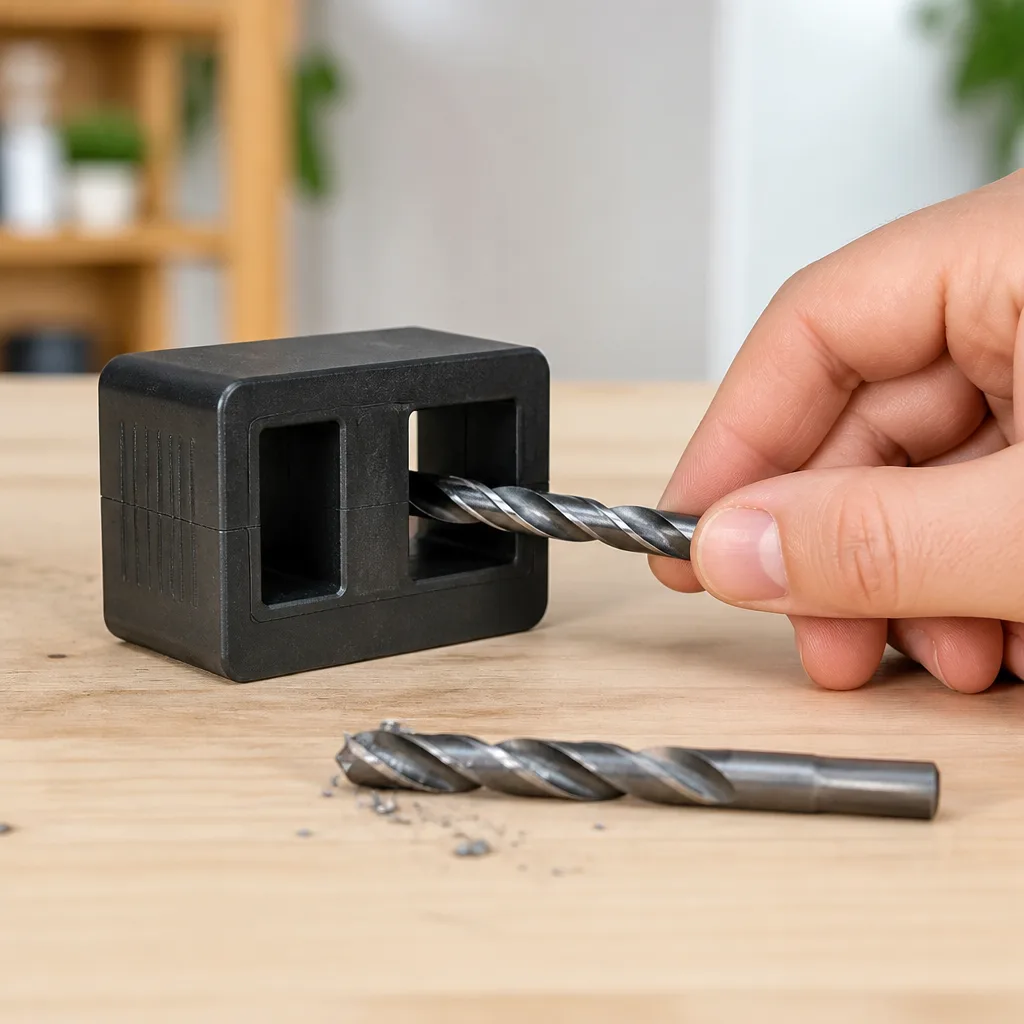
Sometimes you want to get rid of magnetism on purpose, for example when fine chips keep sticking to a drill bit or you are working on sensitive equipment. There are several ways to do it.
- Magnetizer and demagnetizer blocks: Small plastic blocks with two openings and permanent magnets inside. Pulling a tool through one opening magnetizes it, pulling it through the other largely removes the magnetism.
- Decreasing alternating field: The classic method. A strong alternating field is slowly reduced, or the part is slowly pulled out of the field. The domains flip back and forth again and again, a little less each cycle, until hardly any magnetism remains. This is also how old tube TV screens and even warships were demagnetized, a process known as degaussing.
- Heating above the Curie temperature: This works reliably but is a bad idea for tools, because it ruins the hardness of the steel.
- Vibration: Mechanical vibration can reduce magnetism, but it is hard to control.
06
How to keep your magnets strong
The causes of lost strength point to a few simple everyday rules. Follow them, and a good magnet will serve you well for many years.
- Watch the temperature: Keep magnets away from stovetops, radiators, soldering irons and the dashboard on a hot summer day. If a magnet will work somewhere warm, check its grade before you buy.
- Stack them the right way: Store magnets so they attract each other instead of forcing them together. Like poles pressed against each other for a long time act as an opposing field.
- Do not let them slam together: Two strong neodymium magnets jumping onto each other can chip. A piece of cardboard or plastic between them protects both the magnets and your fingers.
- Keep them dry: Neodymium magnets are usually coated because the material corrodes otherwise. A damaged coating is a good reason to keep the magnet away from moisture.
For magnetized tools, by the way, the opposite applies: it is completely normal for the effect to fade over time. A quick pass over the magnet is all it takes to refresh it.
07
Frequently asked questions
How long does a screwdriver stay magnetic?
It depends on the steel. In most cases the effect fades after a while. Simply run it over the magnet again and it works like new.
Does a neodymium magnet lose strength on its own over time?
Barely. As long as it does not get too hot, is not exposed to strong opposing fields and is not damaged, it stays strong for a very long time.
Can I recharge a weakened magnet?
If the loss is partial, remagnetizing with very strong fields is possible, but it takes special equipment. Once a neodymium magnet has passed its Curie temperature, it is permanently damaged.
Can magnets go in the dishwasher or oven?
Better not. Standard neodymium magnets are often rated only to about 80 °C (176 °F), and moisture can attack their coating.
In short: magnetizing means creating order, and demagnetizing means breaking it up. Keep an eye on heat, impacts and opposing fields, and your magnets will stay strong for years.
Sources:
Explore
Read next
 Types of MagnetsFrom bar magnets to neodymium super magnets: an overview of the most important types of magnets and their uses.
 Uses of MagnetsMagnets are used far beyond speakers and fridges: learn about their role in data storage, deflection magnets and relays.
 Magnetism: What Is It?What is magnetism, how does it arise physically and what can you do with it? We take a closer look at this fascinating phenomenon.