
6 min read
Magnetic Toys for Kids: How to Keep Play Safe
Kids love magnets, but small strong magnets can be dangerous if swallowed. Here is how to spot safe toys and enjoy magnet play.
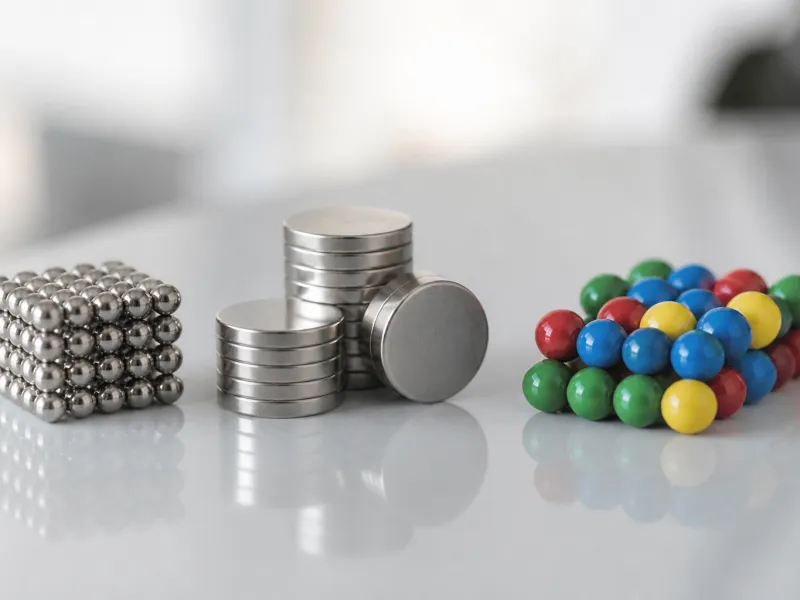
Kids love magnets. Things pull together or push apart as if by magic, pieces click into place, and suddenly there are towers, houses and rockets. Magnetic toys can spark creativity, build fine motor skills and awaken curiosity about science.
At the same time, there is a serious risk many parents underestimate: small, strong magnets can cause severe internal injuries if swallowed. In this guide, you will learn how to spot safe magnetic toys, what the EN 71 standard and age labels mean, what to watch for with magnetic building tiles and which experiments work well for kids.
01
What kids learn from playing with magnets
Magnetic toys are more than a pastime. Building with magnetic tiles lets kids explore shapes, symmetry and balance firsthand: which side holds weight, and when does the tower tip over? By sorting and testing, they discover that invisible forces are at work, that things can attract and repel, and that not every material reacts. This trains careful observation, patience and dexterity. Many children end up asking questions that lead straight into physics, which is exactly what makes magnets such a great first step into science.
02
Why small strong magnets are so dangerous
A single swallowed magnet often passes through the body unnoticed. The danger rises sharply when a child swallows several magnets, or one magnet together with a piece of metal. The pieces can then attract each other through the walls of the intestines and pinch the tissue in between.
That pressure cuts off blood flow, and the tissue can die. Possible consequences include inflammation, holes in the bowel wall, blockages or twisting of the intestines. In the worst case, these injuries are life threatening, and surgery or endoscopy is often needed.
What makes it so tricky is that the early signs look harmless. Stomach pain, vomiting, constipation or fever can resemble a stomach bug and may appear only days later. Neodymium magnets are especially risky because they are both very strong and very small. Pediatricians also warn teenagers, since tiny super magnets are popular for faking tongue or cheek piercings.
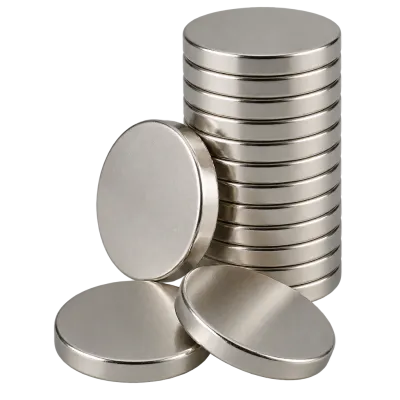 Matching productNeodymium disc magnets setAmazon →

03
EN 71, CE marking and age labels
In the EU, toys must comply with the Toy Safety Directive. The key safety standard for mechanical properties is EN 71-1. It covers toys intended for children under 14 and includes specific requirements for magnets.
- Magnetic flux index: magnets that can come loose and are small enough to swallow must have a flux index below 50 kG²mm². Stronger magnets must be large enough, or built in securely enough, that they cannot fit into the small parts cylinder testers use to check whether something can be swallowed.
- Warnings: magnetic toys must point out possible hazards, and instructions must suit the intended age.
- Age labels: toys meant for children under 36 months face especially strict small parts rules. So the age on the box is not just a hint about difficulty. Often it is a safety warning.
- CE marking: with the CE mark, the manufacturer declares that the product meets EU requirements. A voluntary seal such as the German GS mark shows that an independent body has tested it as well.
Important: the European Commission has clarified that small magnetic balls and magnetic building kits count as toys, even when they are marketed to adults. In the United States, a similar rule with the same limit has applied since October 2022 to magnet products meant for amusement, stress relief or jewelry, while children's toys fall under the ASTM F963 toy standard. Rules change and differ from country to country, so check the current requirements where you live if in doubt.
04
Magnetic building tiles: what to look for
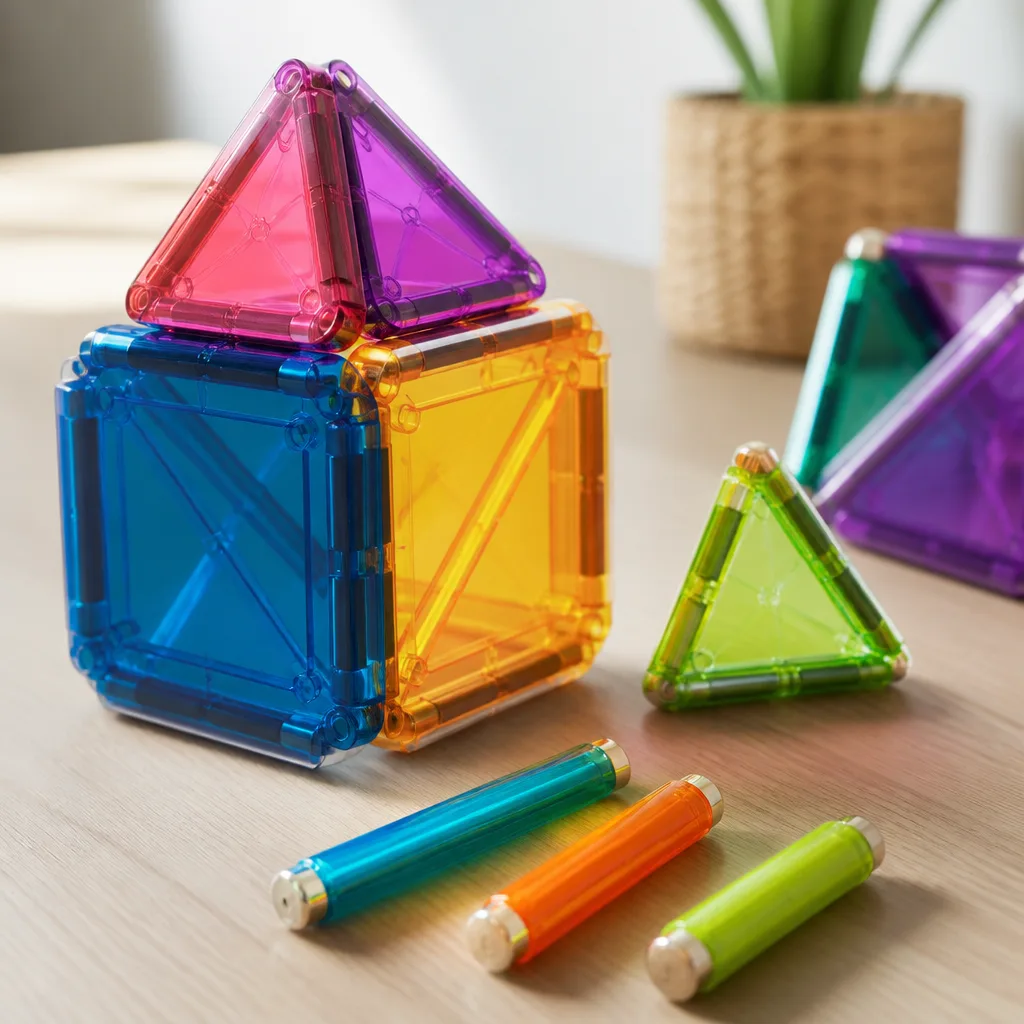
Magnetic tiles and rods are popular because they hold together easily and deliver quick wins. The magnets sit inside plastic housings, and as long as those housings are intact, children cannot get to them.
- Buy from reputable sellers: look for the CE mark or the relevant local certification, manufacturer details, an age label and warnings in your language. Be cautious with very cheap offers on online marketplaces.
- Inspect regularly: check pieces for cracks, broken corners and loose seams. Remove damaged pieces right away.
- Count the pieces: if something is missing, find it before a toddler does.
- Watch for recalls: the EU Safety Gate portal and, in the US, the CPSC regularly list magnetic toys that fail safety requirements.
05
Everyday tips for parents
The biggest danger often does not come from toys at all but from magnets made for adults: fridge magnets with small balls, neodymium cubes sold as desk toys, magnets from craft kits or tools.
- Always keep strong magnets out of children's reach.
- Supervise young children when they play with magnetic toys.
- Explain to older kids that magnets never go in the mouth.
- Make sure older siblings do not share their magnet sets with toddlers.
- Dispose of broken toys so that no loose magnets are left lying around.
If you suspect your child has swallowed magnets, do not wait and see. Get medical help or go to the emergency room right away, and clearly mention that magnets are involved. That way the doctors know to take an X-ray. Keep a close eye on your child in the meantime, and do not give food or drink unless a doctor says it is okay.
 Matching productFridge magnetsAmazon →
06
Educational experiments for kids
Magnets are perfect for hands on discovery, ideally with large, easy to hold magnets and an adult nearby.
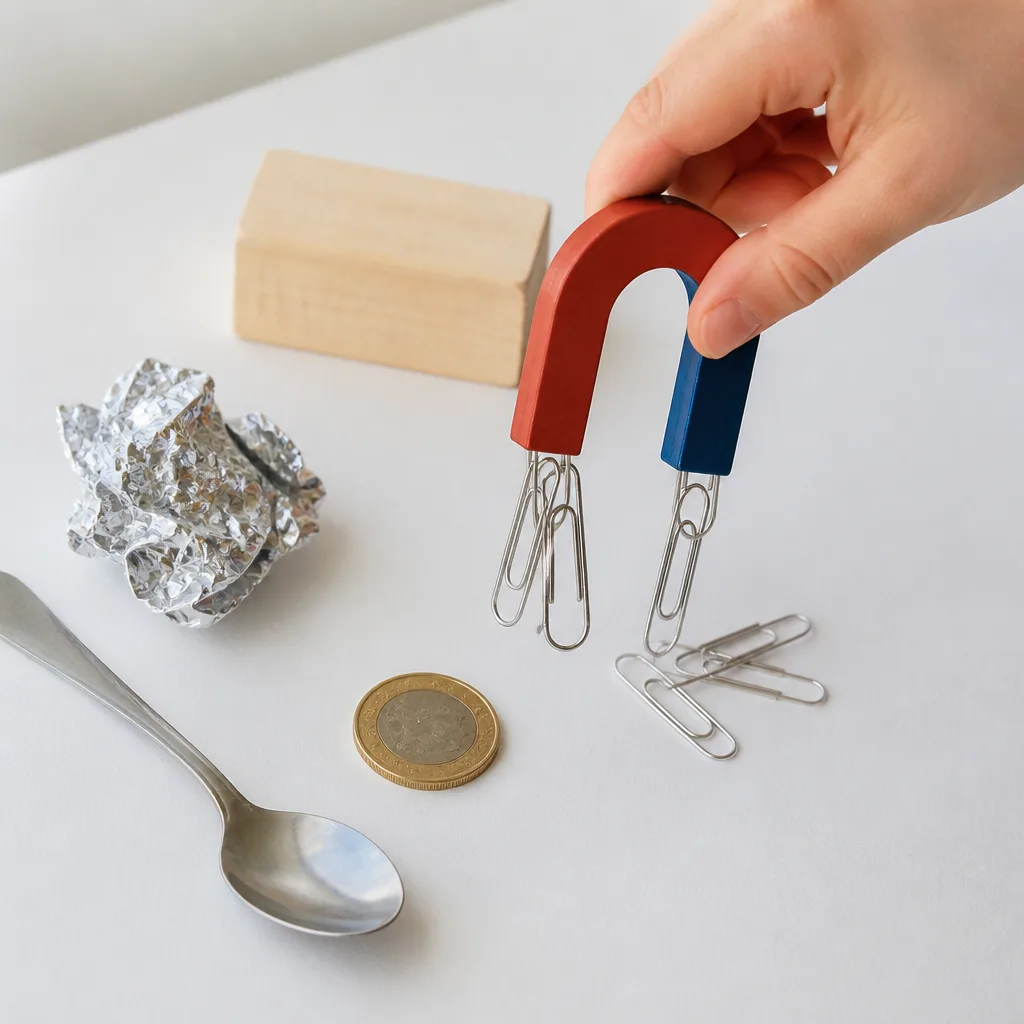
- What sticks and what does not? Collect spoons, coins, paper clips, wood and aluminum foil, and let your child guess which items stick. Surprise: not every metal is magnetic.
- Build your own compass: magnetize a sewing needle by stroking it over a magnet several times in the same direction. Place it on a piece of cork floating in a bowl of water and watch it swing toward north. An adult should handle the needle.
- Magic through walls: test whether the force works through paper, cardboard, wood or water by moving a paper clip across a plate with a magnet underneath.
- Magnetic fishing game: make paper fish with a paper clip and a fishing rod with a large magnet on the string.
- See the field lines: iron filings sealed inside a clear, tightly closed container reveal the magnetic field without any mess.
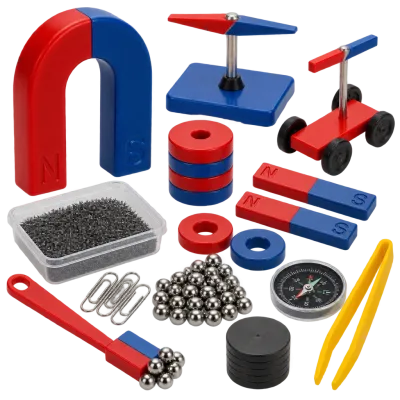 Matching productMagnet science kit for kidsAmazon →
07
Frequently asked questions
What age is right for magnetic toys?
It depends on the product. Follow the manufacturer's age label, and keep in mind that small parts are especially dangerous for children under three.
Is swallowing a single magnet harmless?
Not necessarily. You often cannot be sure it really was just one, or that no metal was swallowed too. Always have your child checked by a doctor.
Are magnetic balls for adults allowed?
In the EU, small magnetic balls and magnetic building kits count as toys and must meet toy safety rules, even if they are marketed to adults. In the US, such products must meet the federal magnet standard. Either way, store them where children cannot reach them.
How can I recognize a safe magnetic toy?
Look for proper safety marking, a clear age label, warnings, magnets that are fully enclosed and a reputable manufacturer or retailer.
What should I do if my child swallowed a magnet?
Take your child to a doctor or the emergency room right away, even if there are no symptoms yet. If you can, bring a matching piece or the packaging so the doctors know what they are dealing with.
Sources:
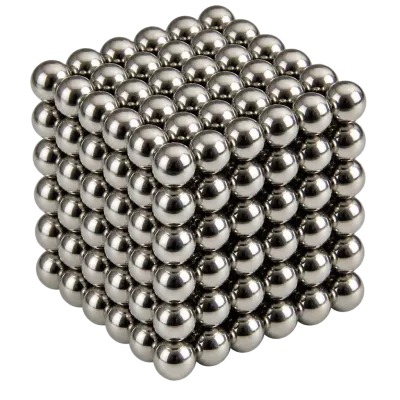 Matching productMagnetic ballsAmazon →
Explore
Read next
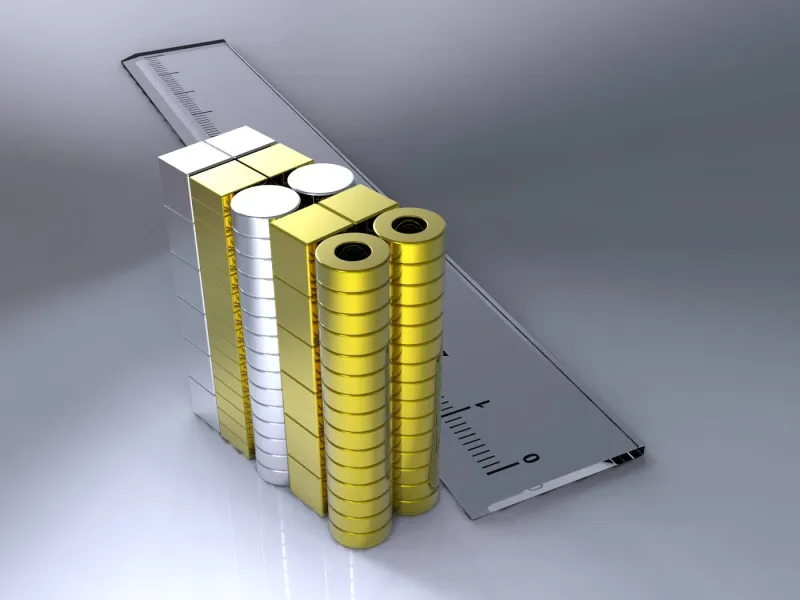 Types of MagnetsFrom bar magnets to neodymium super magnets: an overview of the most important types of magnets and their uses.
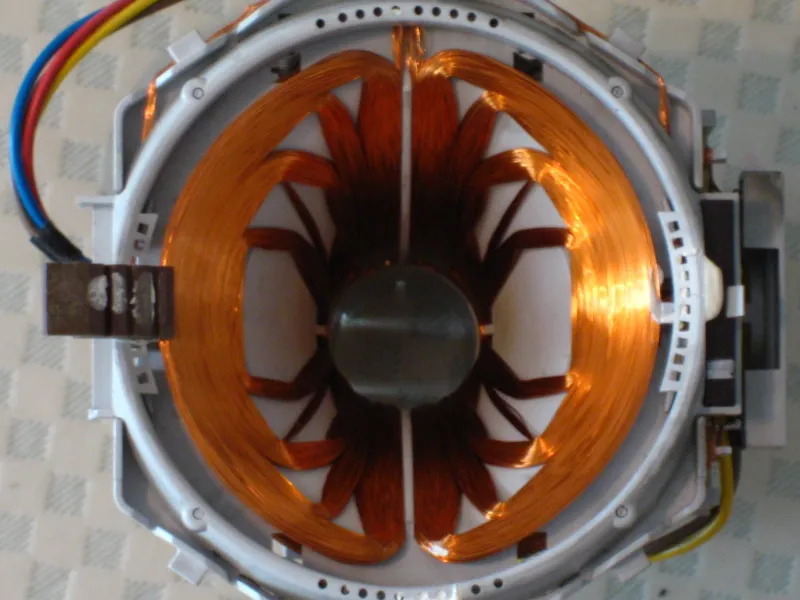 Uses of MagnetsMagnets are used far beyond speakers and fridges: learn about their role in data storage, deflection magnets and relays.
 Magnetism: What Is It?What is magnetism, how does it arise physically and what can you do with it? We take a closer look at this fascinating phenomenon.