
6 min read
Magnet Fishing: Gear, Rules and Safe Finds
Which magnet, which rope, where is it allowed and what to do about munitions? Everything you should know before your first cast.
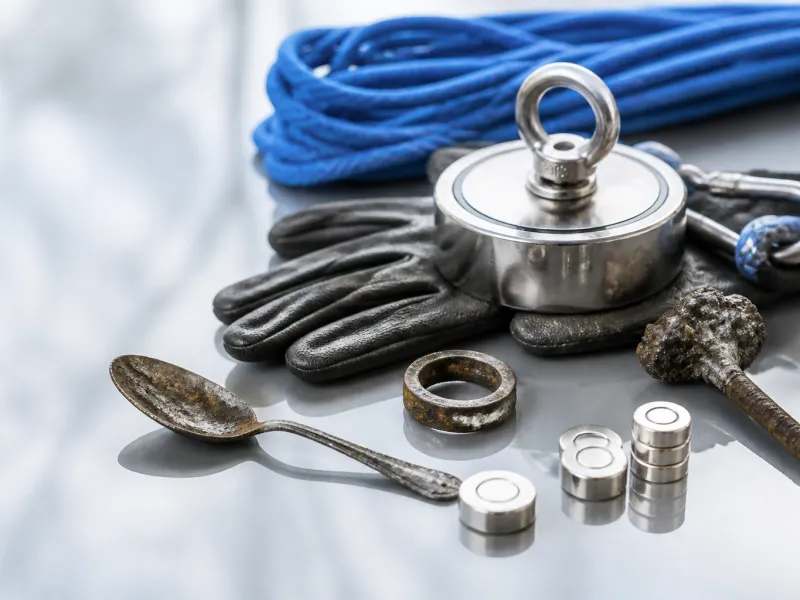
A rope, a powerful magnet and a bridge over a canal: that seems to be all you need to start magnet fishing. You toss the magnet into the water, drag it slowly across the bottom and see what sticks. Sometimes it is a rusty nail, sometimes an old bicycle, and sometimes something with a genuinely good story behind it.
That element of surprise is what makes the hobby so appealing. At the same time, magnet fishing is not as harmless as skipping stones. Many waterways still hold leftovers from two world wars, and the legal situation in Germany, Austria and Switzerland is far from simple.
In this guide you will learn which gear makes sense, what to keep in mind legally, how to deal with dangerous finds and what magnet fishers actually pull out of the water.
01
What is magnet fishing?
Magnet fishing means searching rivers, lakes, canals or harbors for iron and steel objects using a strong neodymium magnet tied to a rope. You either throw the magnet out or lower it from a bridge, then pull it back along the bottom.
According to popular lore, the idea came from boat owners trying to recover keys that had fallen overboard. As a hobby, magnet fishing has spread across Europe since roughly the early 2000s, helped along by videos of people showing off spectacular finds.
One key point: a magnet only attracts ferromagnetic metals, mainly iron and steel. Coins made of copper, brass, aluminum, gold or silver stay on the bottom, no matter how strong your magnet is.
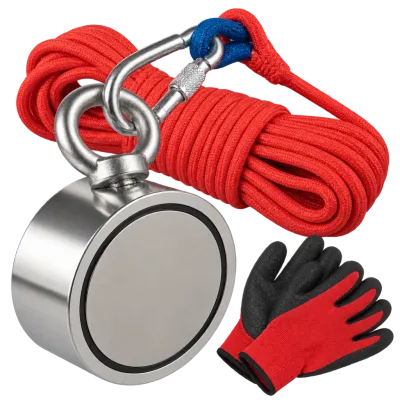 Matching productMagnet fishing kitAmazon →
02
Choosing the right gear
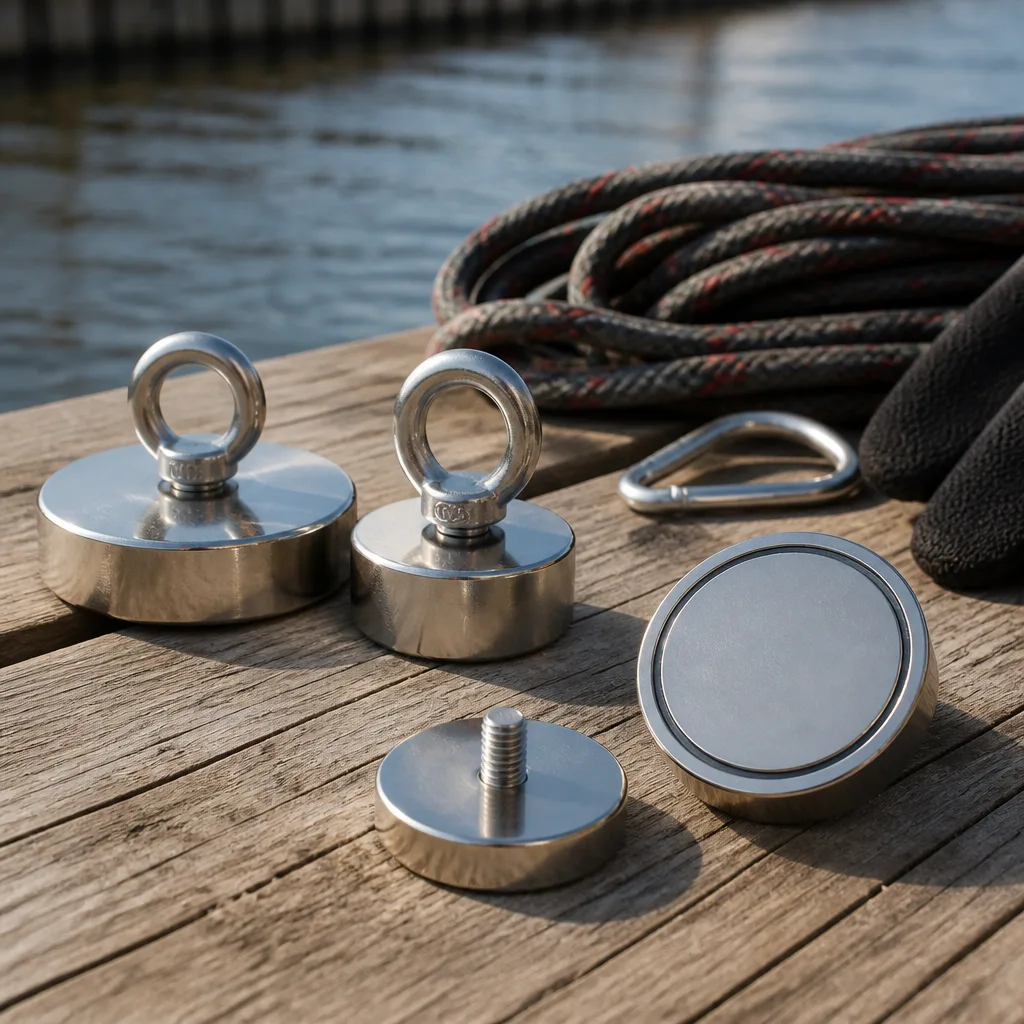
The magnet is the heart of your kit. Almost everyone uses neodymium magnets because they pack enormous holding force into a small size. Most are pot magnets with an eyebolt or thread, where the magnet sits inside a steel cup that concentrates its force on one side.
The magnet manufacturer supermagnete.de recommends that beginners start with single sided models offering around 30 to 45 kilograms of pull force. More experienced searchers move on to double sided retrieval magnets or ring magnets that are magnetic all the way around. The manufacturer also urges caution at the top end: very strong magnets are more likely to get stuck on sheet piling or scrap, and they can seriously pinch fingers.
| Magnet type | Key feature | Best for |
|---|---|---|
| Single sided pot magnet | Holding face on the bottom, rarely tips over | Beginners, searching from bridges |
| Double sided retrieval magnet | Holding faces on the bottom and side | Throwing and dragging along the bottom |
| Ring magnet | Magnetic all around | Experienced searchers, covering large areas |
Besides the magnet, pack these items:
- Rope: a strong rope, often polypropylene, typically 15 to 30 meters (about 50 to 100 feet) long. Check it regularly for frayed spots.
- Knot: a knot with high knot strength, such as the Palomar knot. Many people also secure the eyebolt thread with threadlocker.
- Gloves: cut resistant, waterproof work gloves are a must, because rusty metal has sharp edges.
- Extras: a bucket or box for finds, towels for drying, perhaps a grappling hook and, when working near steep banks, a life vest.
 Matching productNeodymium disc magnets setAmazon →
03
Where is magnet fishing allowed?
The honest answer: it depends, and a lot. There is no single rule for the German speaking countries. What follows is a general overview, not legal advice.
Germany: The legal situation is disputed. Hamburg, for example, does not treat magnet fishing as ordinary public use of a waterway but as a special use that needs a permit. Many other states take a similar view. On top of that come heritage laws: every state requires archaeological finds to be reported, and under the so called treasure regalia, movable archaeological objects generally become state property.
Austria: The situation is seen as particularly strict. After a fatal accident involving wartime munitions, magnet fishing was described in a 2022 ruling as generally prohibited. Always check with the authorities before you start.
Switzerland: Waterways and archaeology are largely handled by the cantons. Under Swiss law, finds of scientific value generally belong to the canton. Ask the relevant cantonal office before you head out.
Everywhere, private waters need the owner's permission, and fishing rights and nature reserves must be respected. Avoid spawning grounds, since stirring up the bottom can disturb fish and fragile habitats. The safest route is to ask your municipality, water authority or heritage office.
 Matching productMagnetic whiteboardAmazon →
04
Dangerous finds: munitions and weapons
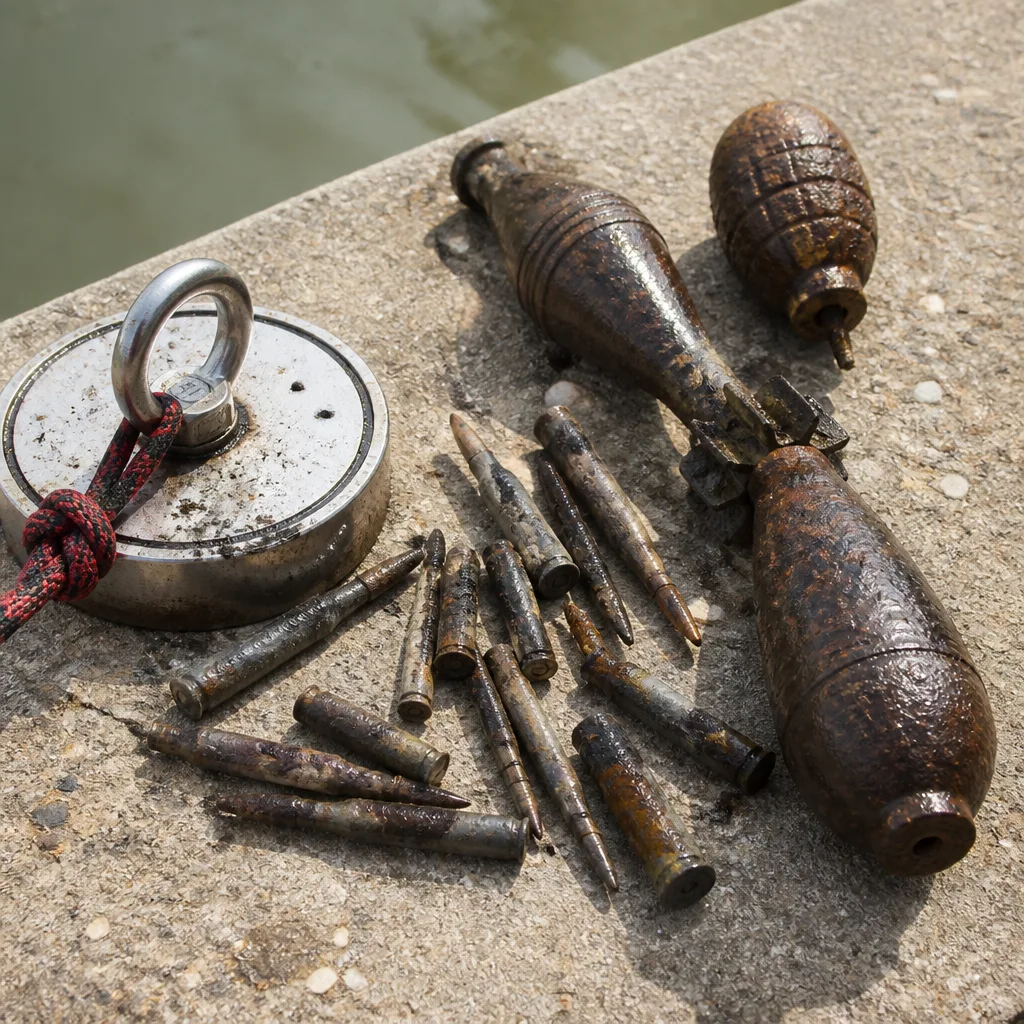
The biggest risk in magnet fishing is not the rope or the magnet but what is lying in the water. Magnet fishers in Germany regularly pull up grenades, cartridges and other munitions from World War I and World War II. The bomb disposal service of Lower Saxony stresses that the danger remains very high decades after the war ended.
Corroded ordnance is almost impossible for laypeople to identify. Some of it also contains white phosphorus, which can ignite on its own when exposed to air. So one simple rule applies:
- Do not touch, do not move: If something suspicious is on your magnet, set the rope down gently and leave the object alone.
- Keep your distance: Step away and keep other people back.
- Report it right away: Call the police emergency number. They will alert the bomb disposal team.
- Never take it with you: Munitions do not belong in your car, basement or display shelf.
The same goes for firearms. They may be linked to crimes and are a matter for the police, not for your collection.
 Matching productMagnetic car phone mountAmazon →
05
Staying safe while searching
Even without munitions, there are a few risks you should know about. Most of them are easy to avoid with a little care.
- Never tie the rope to your body: If the magnet snags, the pull can throw you off balance.
- Pinch hazard: Strong magnets snap onto metal in an instant. Keep your fingers out of the gap.
- Electronics and implants: Neodymium magnets can affect pacemakers and interfere with devices. If you have an implant, talk to your doctor and keep your distance.
- Tetanus: Handling rusty metal is a good reason to make sure your vaccination is up to date.
- Banks and bridges: Slippery slopes and railings cause real accidents. Never search alone in risky spots.
06
What magnet fishers really find
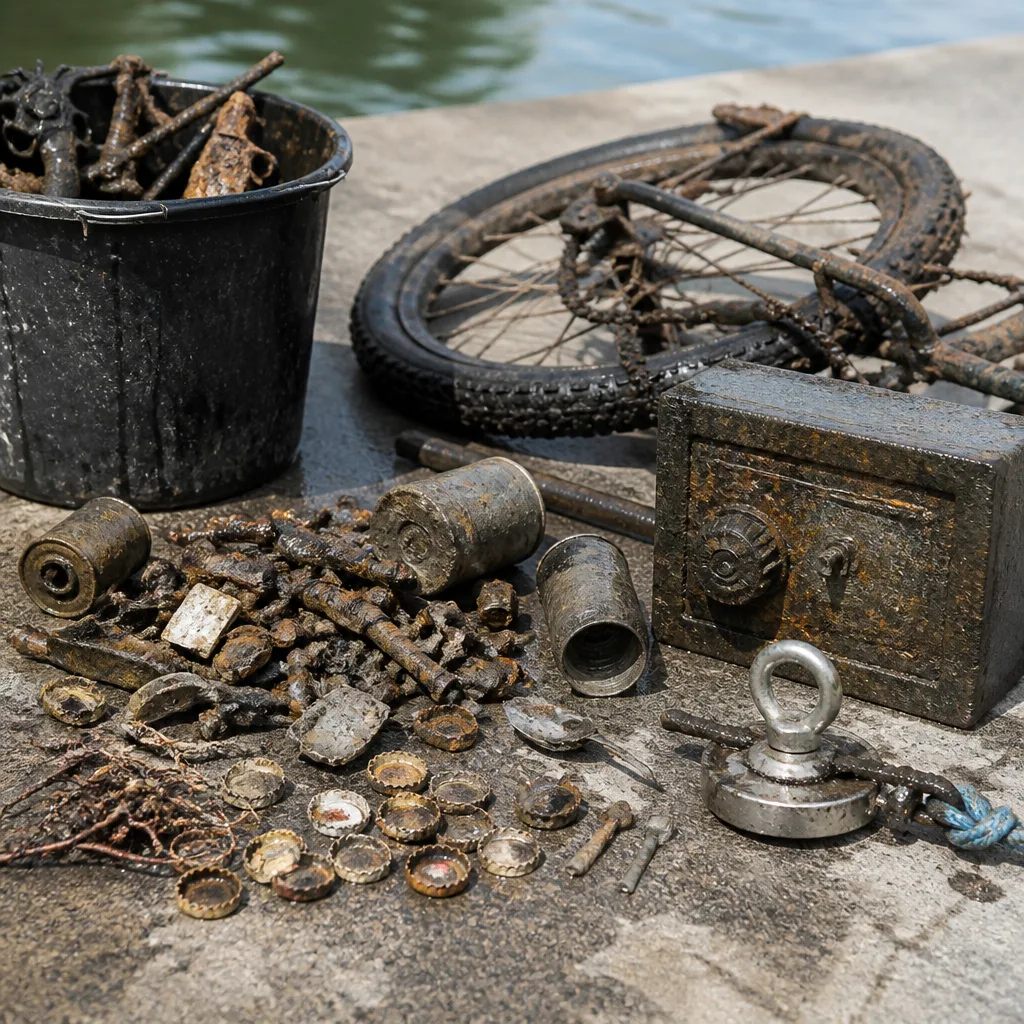
Reality is usually less glamorous than the videos: most finds are junk. Bottle caps, nails, screws, bits of wire and cans end up in the bucket most often.
Then there are bigger pieces like bicycles, shopping carts, wheel rims, tools or even safes. In a few cases, magnet fishers have turned up stolen items and helped solve old cases. Historical objects such as horseshoes or old tools are possible too, but depending on the country they must be reported if they count as archaeological finds.
A nice side effect: magnet fishing can clear metal trash from waterways. You do have to dispose of that trash properly, though. Leaving it on the bank can earn you a fine and gives the hobby a bad name.
 Matching productMagnetic tool holderAmazon →
07
Frequently asked questions
How strong should my first magnet be?
Models with roughly 30 to 45 kilograms of pull force are fine to start. They are strong enough for typical finds and get stuck for good less often.
Can I find gold coins with a magnet?
No. Gold, silver, copper, brass and aluminum are not magnetic. You will only find iron and steel objects.
Can I keep what I find?
Ordinary scrap usually yes, provided searching was allowed. Valuable or historical finds fall under lost property and heritage rules and must be reported.
What do I do if my magnet gets stuck?
Pull from a different angle instead of yanking hard. If that does not work, cut the rope rather than putting yourself at risk.
Bottom line: Magnet fishing is exciting and can even leave waterways cleaner. Check permission first, bring good gloves and treat every suspicious find as potentially dangerous.
Sources:
Explore
Read next
 Types of MagnetsFrom bar magnets to neodymium super magnets: an overview of the most important types of magnets and their uses.
 Uses of MagnetsMagnets are used far beyond speakers and fridges: learn about their role in data storage, deflection magnets and relays.
 Magnetism: What Is It?What is magnetism, how does it arise physically and what can you do with it? We take a closer look at this fascinating phenomenon.